
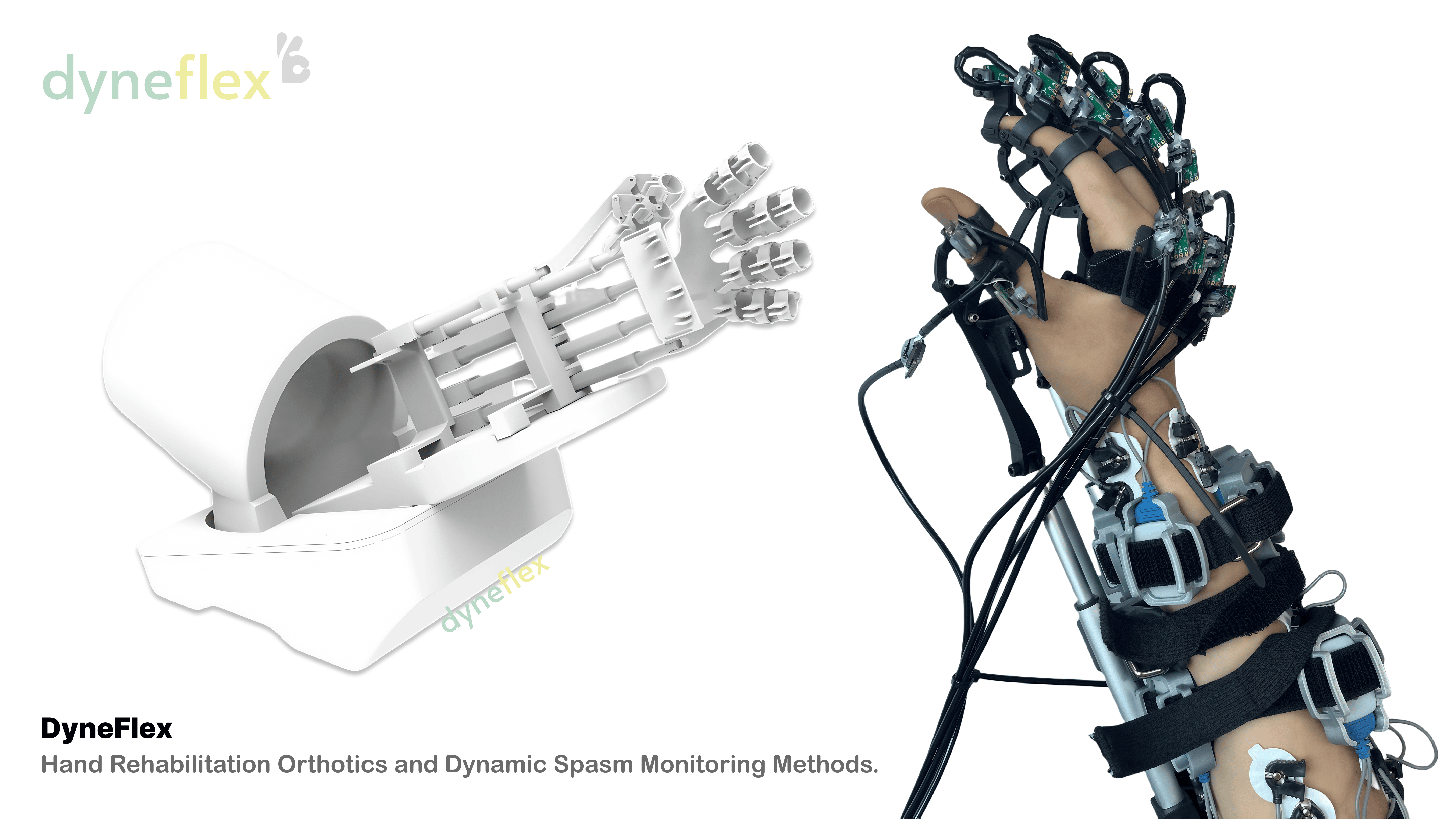
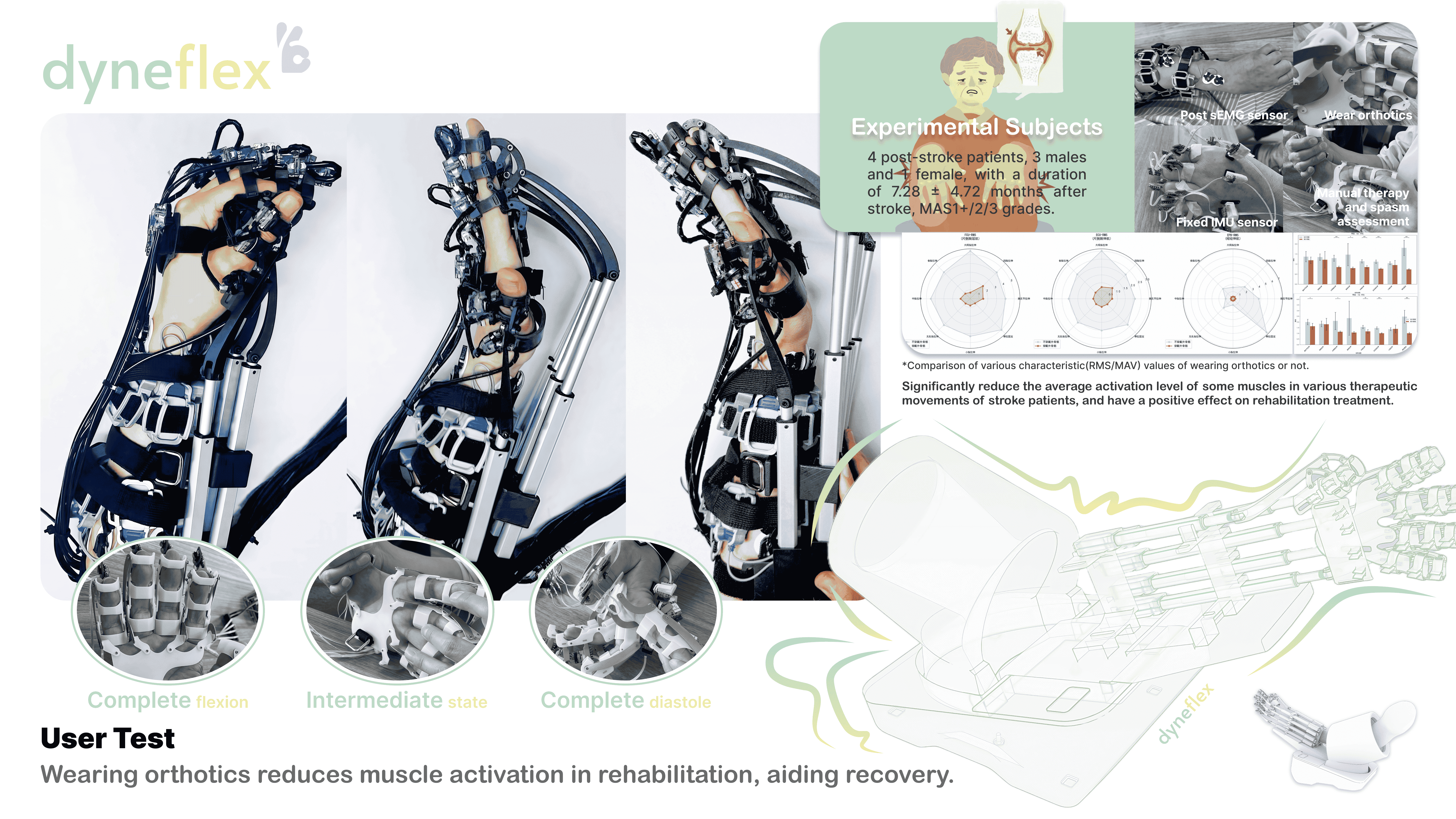
DyneFlex is a hand rehabilitation orthosis for post - stroke spasticity. It uses sensors and AI to dynamically adjust therapy, addressing static orthosis limitations and rehab resource shortages.
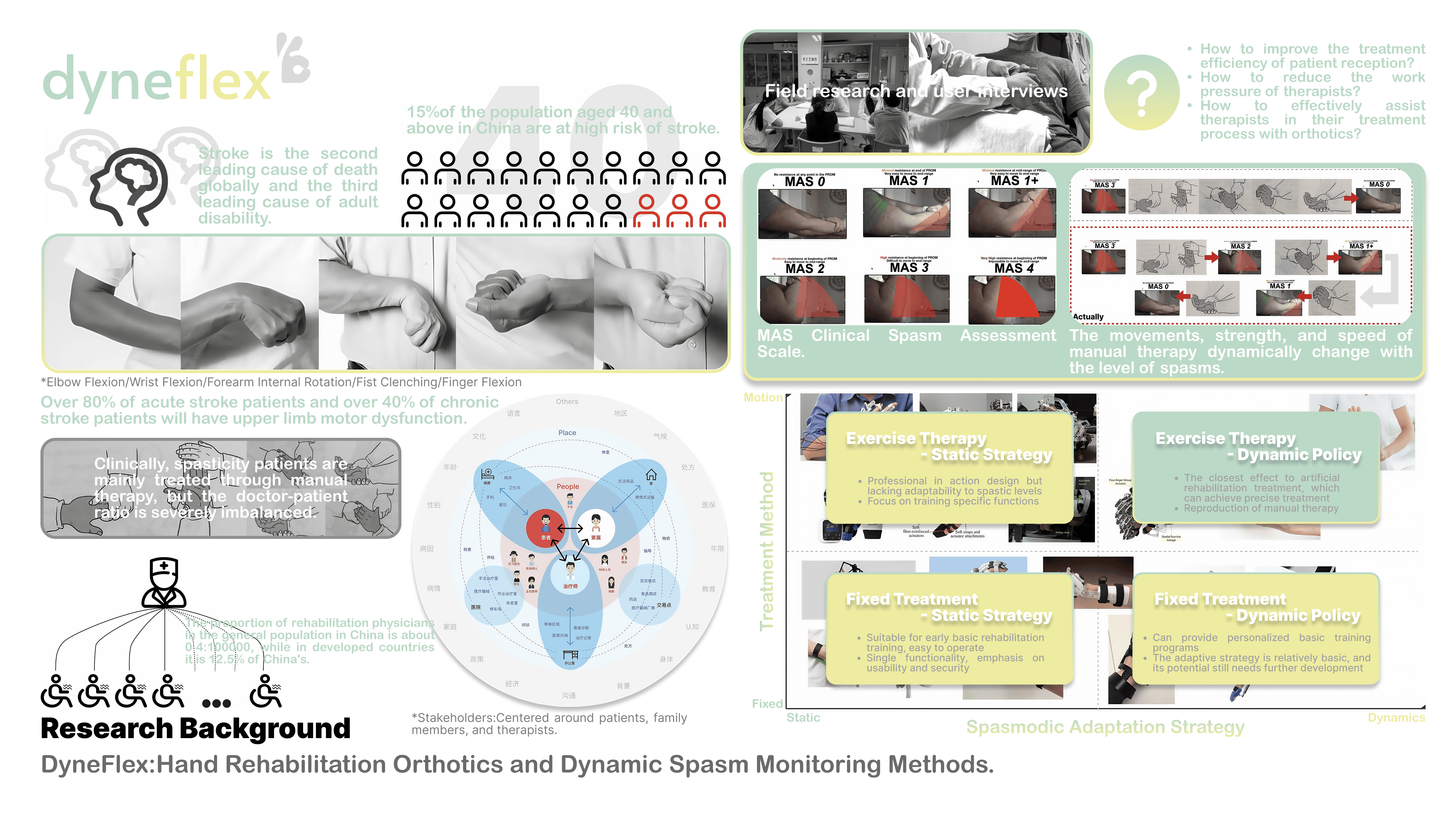
Inspired by high post - stroke spasticity rates (80% acute, 40% chronic) and severe doctor - patient imbalance (China’s rehab docs = 1/12.5 of developed nations). Existing orthoses can’t adapt to dynamic spasticity; manual therapy is unsustainable. Motivated to create a real - time monitoring + adaptive solution mimicking therapists’ adjustments.
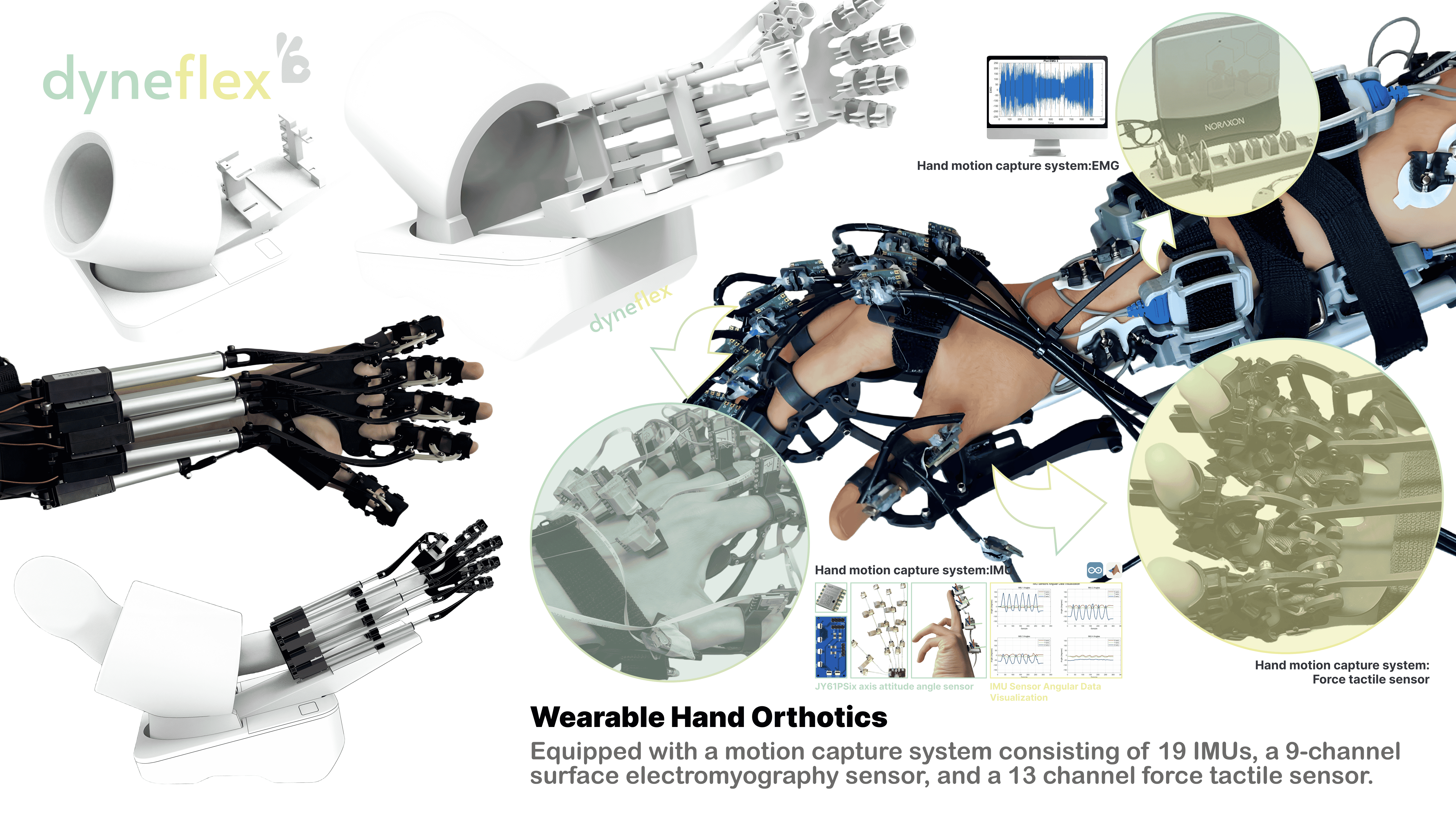
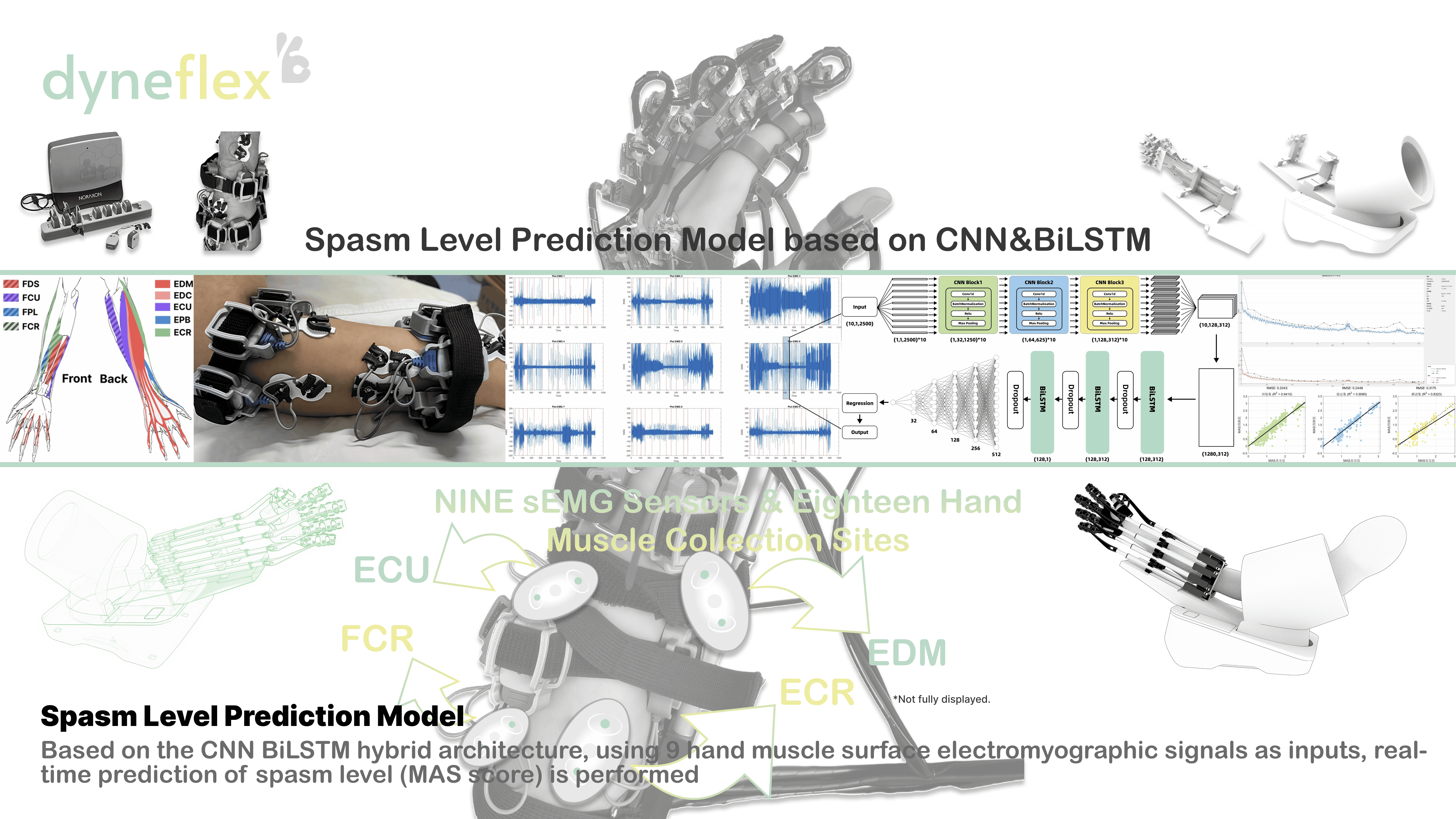
DyneFlex runs on a “sense - analyze - act” loop: 9 - channel sEMG sensors and 19 IMUs capture muscle signals/movements. A CNN - BiLSTM model predicts spasticity (MAS score). Mini actuators, via a four - bar linkage, adjust therapy (e.g., wrist stretches) in real - time. This closed loop ensures tailored treatment, fixing static devices’ “one - size - fits - all” flaw.
Four - stage design: 1) User research: Interviews (9 patients, 2 therapists) highlight needs for dynamic adaptation; market has “dynamic motion therapy” gaps. 2) Tech design: Built a spasm model using 70 manual sessions, training CNN - BiLSTM. 3) Structure: Iterated from dual linkages to open - back, tested via 3D printing. 4) Testing: Adjusted for fit/no joint interference, finalizing the orthosis.
DyneFlex innovates in 4 ways: Dynamic adaptive rehab (adjusts to real - time spasticity). Multi - modal sensing (sEMG + IMU) + deep learning for precision (test R² = 0.83). Fills “dynamic motion therapy” market gap, replicating manual therapy. Balances function + wearability (open - back, special clips), solving “function - comfort” conflicts.
Next: Enhance control (angle error < 10°) to mimic manual therapy. Run large trials (50 + patients, 3–6 months) for long - term efficacy. Improve comfort (light materials, breathable linings) and aesthetics. Develop an app for real - time tracking/remote guidance, expand to home use to ease hospital burdens.
免责申明:本文中部分图文内容转载自jamesdysonaward,相关版权归原作者及出处所有。若涉及post plant侵权,请及时联系我们,我们将第一时间删除处理。