
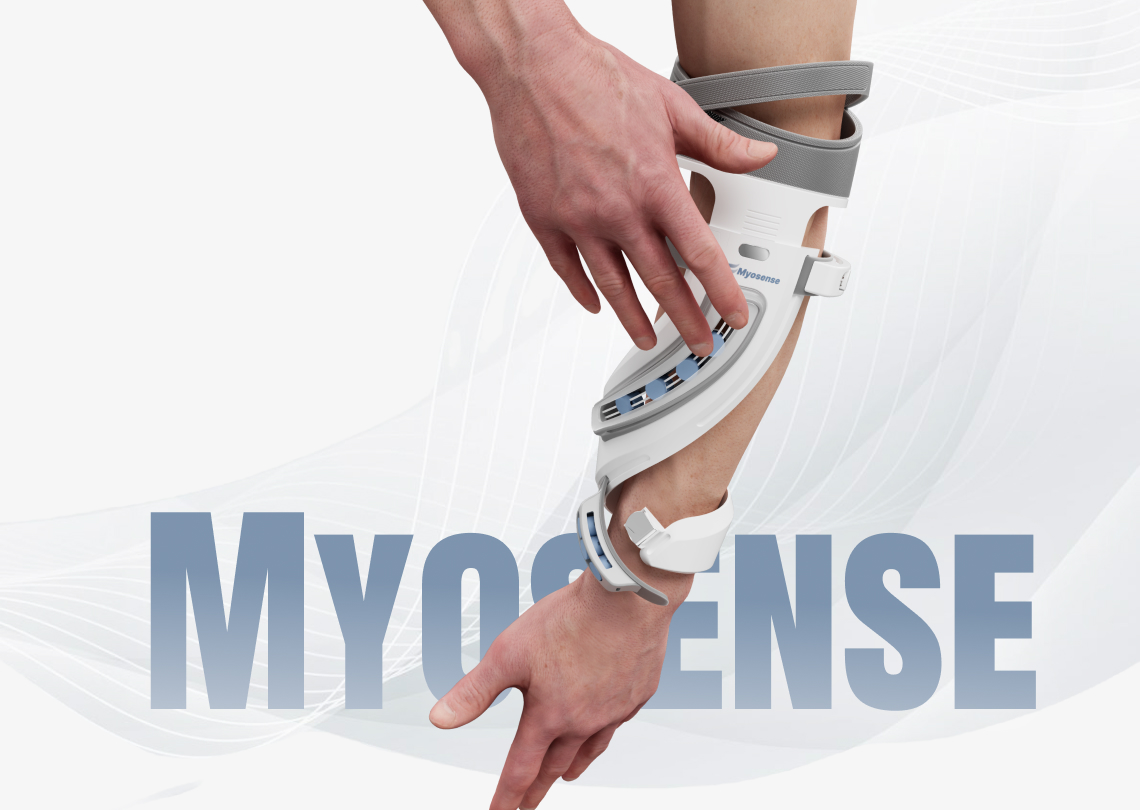
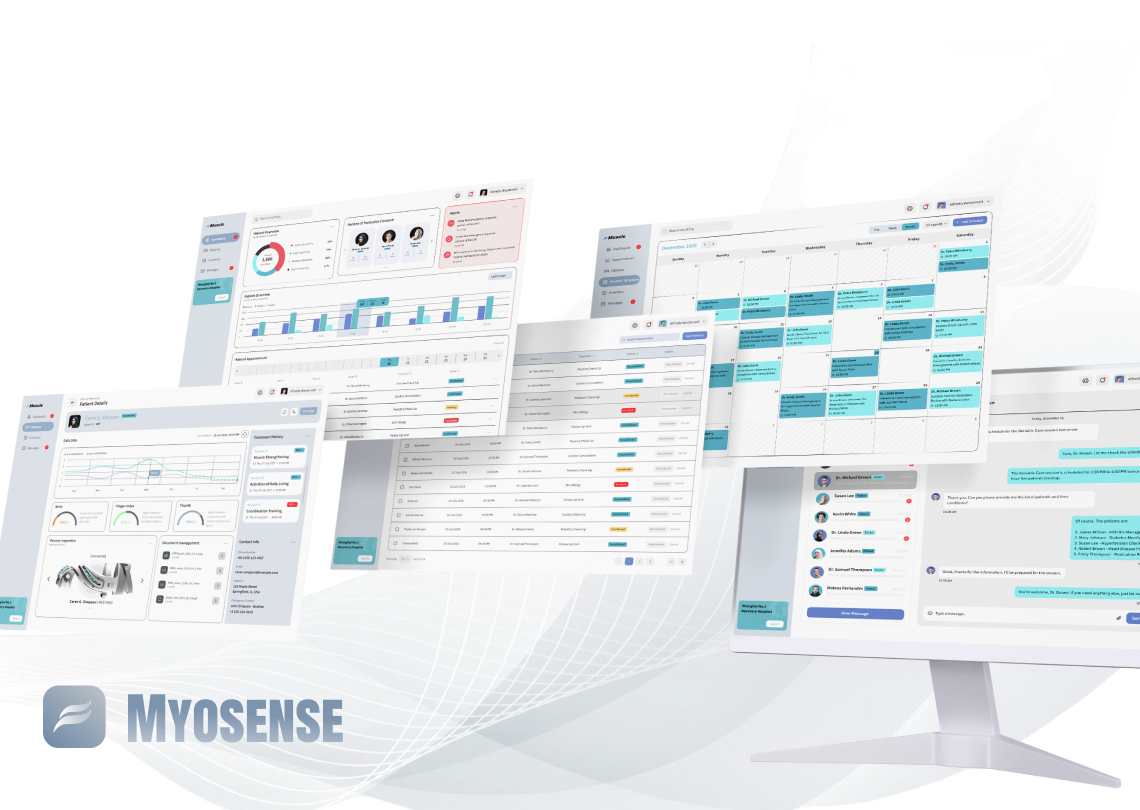
MYOSENSE is a wearable device for stroke patients that detects wrist tendon spasms using MMG signals. It features ergonomic design, dual-positioning, and long-term monitoring, enabling early intervention and improving recovery in daily life.
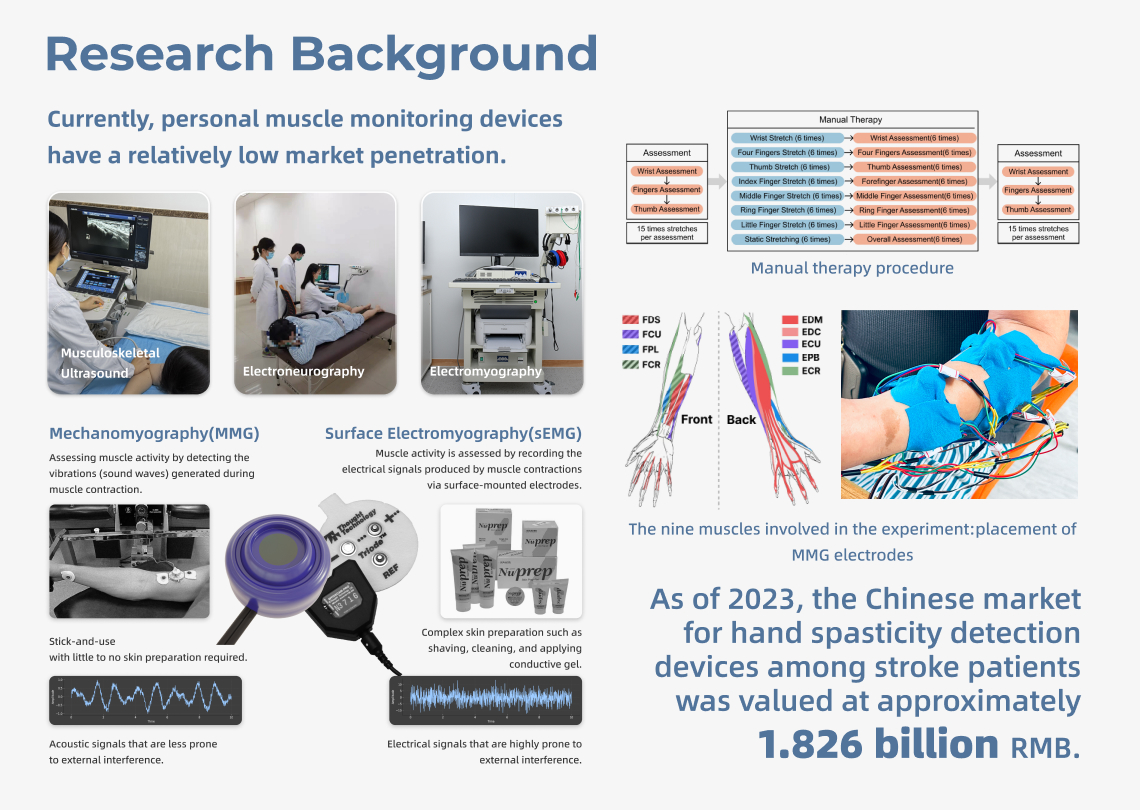
We learned that over 12 million stroke patients in China face low recovery rates, and nearly half experience hand spasms within three months—yet current muscle monitoring tools are hospital-based, expensive, and hard to access daily. Talking with doctors and rehab patients, we saw a clear need for a more practical solution. The idea came from clinical pain points: the need to monitor muscle tension regularly, comfortably, and accurately from home. We envisioned a lightweight, wearable device that adapts to different arm sizes, tracks key muscle activity, and connects users and doctors through real-time feedback.
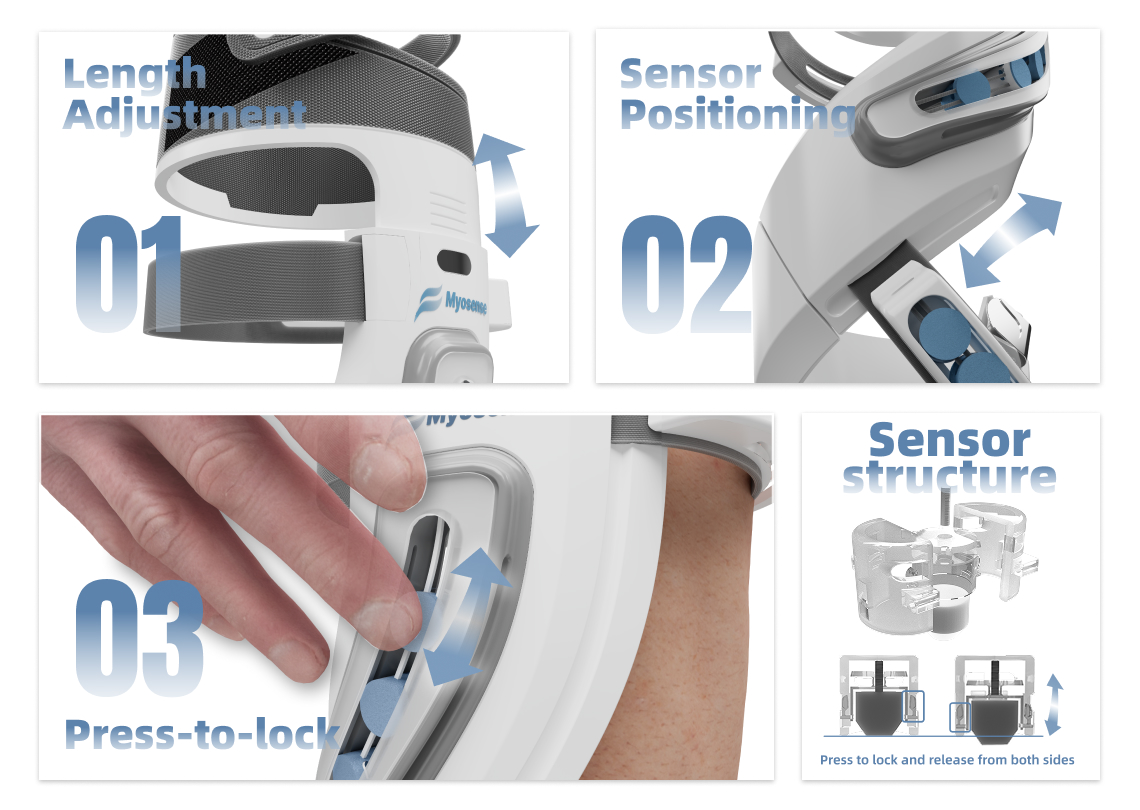
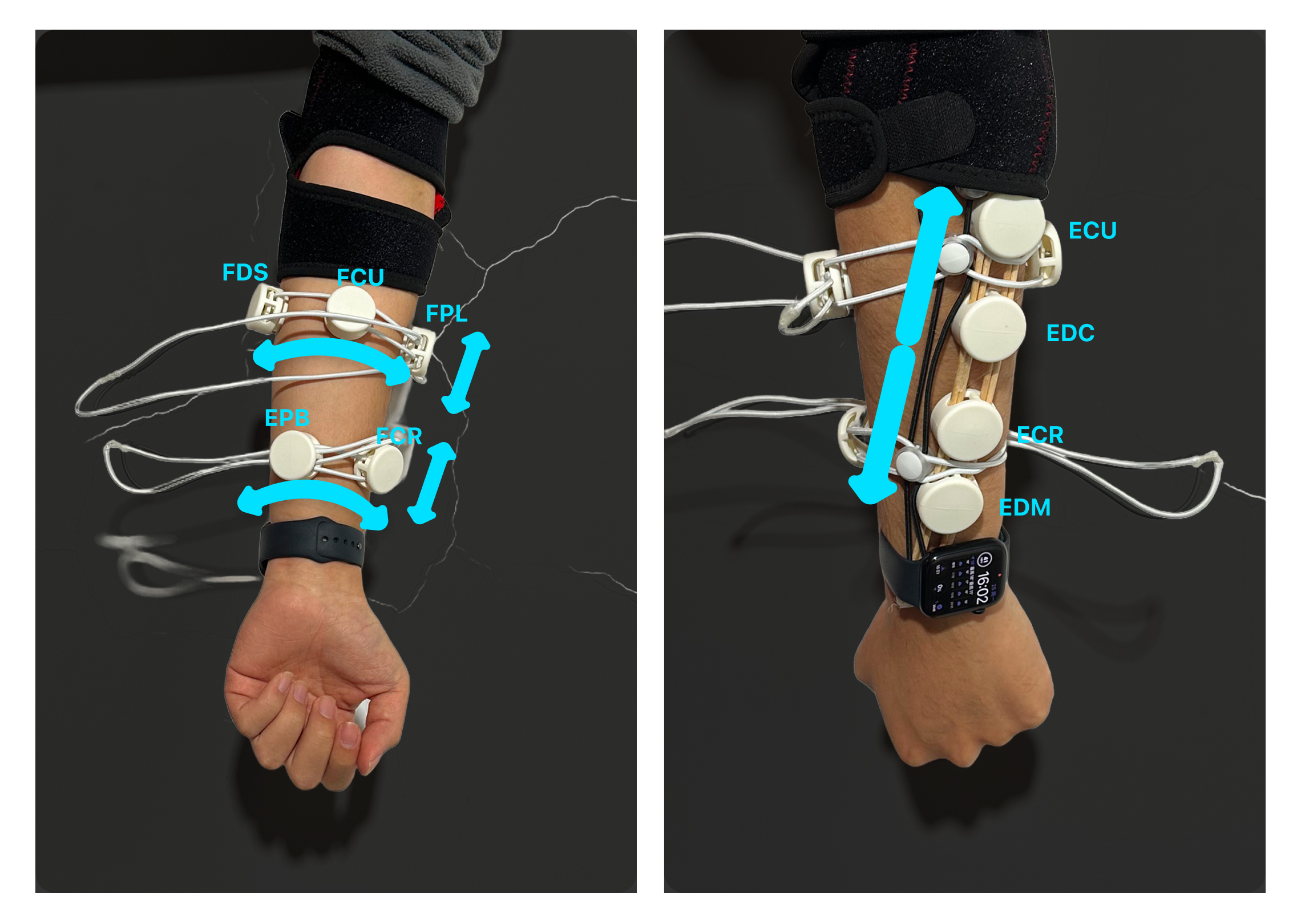
Our device is a wearable band that helps detect abnormal muscle activity in the forearm. It uses 9 tiny sensors, each equipped with a built-in microphone, to pick up soft muscle sounds—tiny vibrations produced when muscles contract. Since each person’s muscle layout is slightly different, the sensors can be moved along a custom curved track that wraps around the arm. This track is based on the strongest signal points from 9 key muscles. During setup, users slide each sensor along the track to find the spot where the signal is strongest. Once positioned, the sensor is pressed down to lock it tightly against the skin. This ensures clear, stable signal collection. The device then sends real-time data to a mobile app, helping patients and doctors track muscle activity and recovery progress over time. It’s comfortable, precise, and personalized for each user.
We began by identifying a clear need: stroke patients had no easy way to monitor muscle spasms at home. Our first concept was a simple wristband with fixed sensors, but early tests showed poor signal accuracy and discomfort. We then developed a 3D-printed shell with movable sensor slots. This led to the idea of a curved track that matches the shape of the forearm. By allowing each of the 9 sensors to slide along this track and lock into place, we achieved better contact with skin and more accurate data. We tested different fastening methods and chose a press-to-lock mechanism for stability. The structure was later made adjustable to fit different arm sizes. In parallel, we built a mobile app to visualize signals and support rehab tracking. Through multiple iterations, we improved comfort, fit, and data quality—creating a wearable that feels personal, intuitive, and clinically useful.
Unlike traditional muscle monitoring devices that are bulky, fixed in size, and limited to hospitals, our design is wearable, adjustable, and user-friendly for home use. It features 9 movable sensors that slide along a custom-built curved track, allowing each sensor to be positioned at the strongest signal point on each person’s arm. This ensures accurate, personalized data collection for a wide range of users. The press-to-lock design keeps the sensors stable and tightly attached to the skin. We also built a mobile app that shows real-time data, tracks recovery, and allows remote communication between patients and doctors. This transforms muscle monitoring from a clinic-only procedure into a continuous, connected experience—bridging the gap between hospital care and home rehabilitation. Our solution is not just a device, but a complete system built around adaptability, accuracy, and accessibility.
免责申明:本文中部分图文内容转载自jamesdysonaward,相关版权归原作者及出处所有。若涉及post plant侵权,请及时联系我们,我们将第一时间删除处理。