
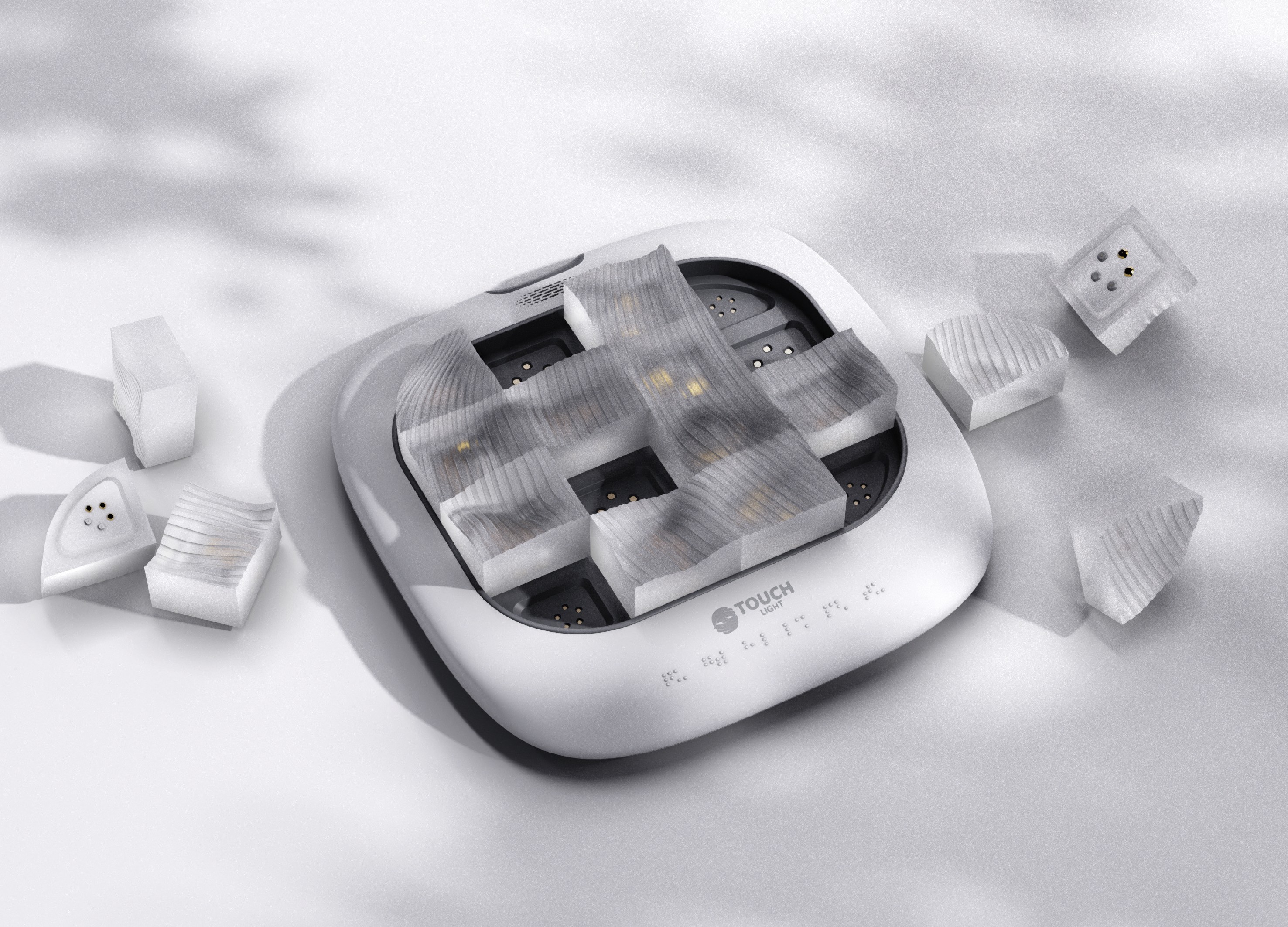
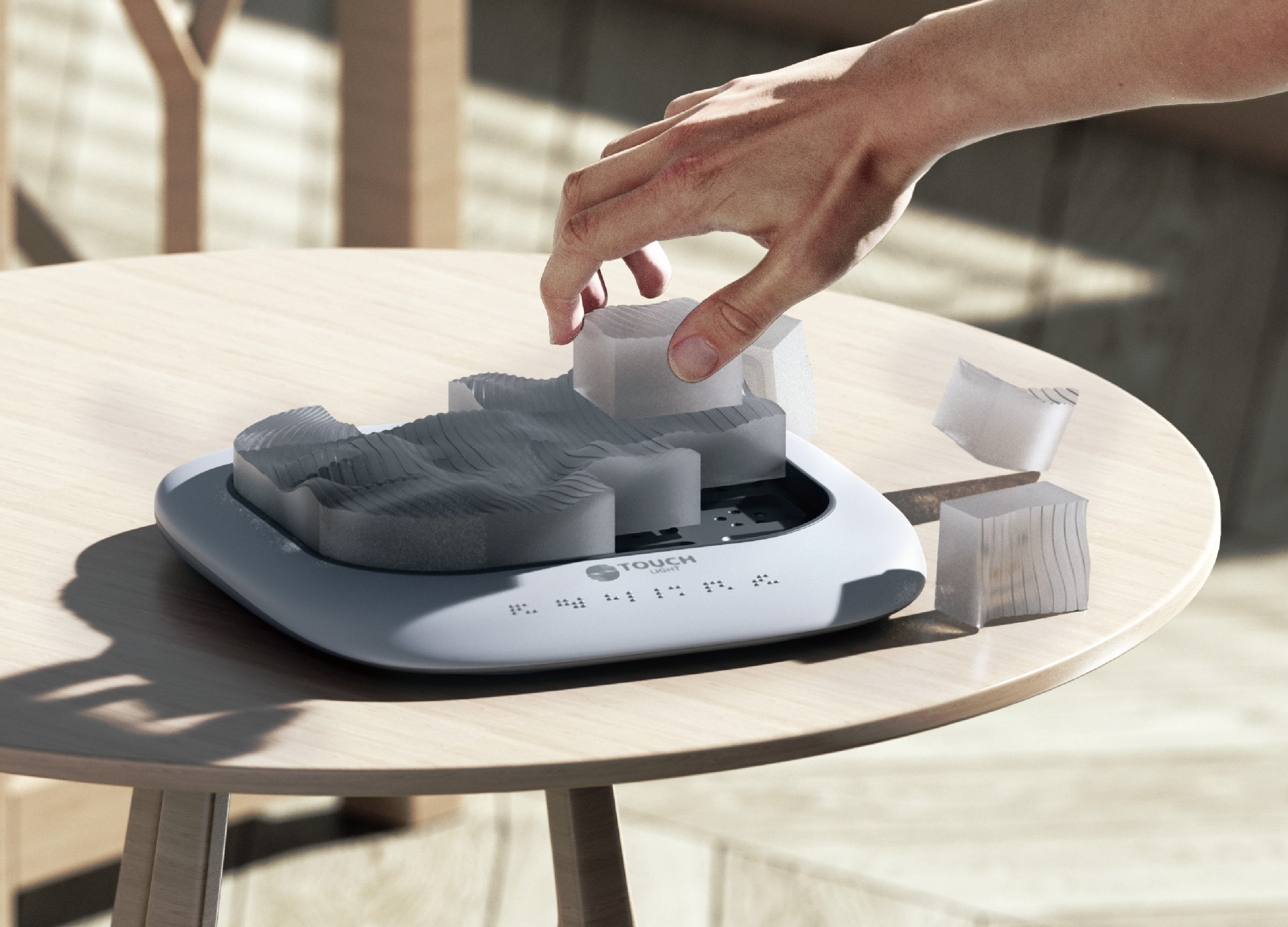
Tactile training puzzle designed for acquired visually impaired patients. With the help of flexible bionic materials and intelligent sound and light feedback, the visually impaired can exercise their tactile recognition in interesting interactions.
Knowing the plight of the acquired visually impaired group, they not only face inconvenience in life due to sudden vision loss, but also lack of boring rehabilitation training, and psychological gap and social estrangement are often ignored. It is hoped that the stereotype of rehabilitation will be broken with interesting interaction, the cognitive connection will be rebuilt through the sense of touch, and the psychological gap will be filled, so that the visually impaired can regain their perception of the world and confidence in life in "touch-splicing".
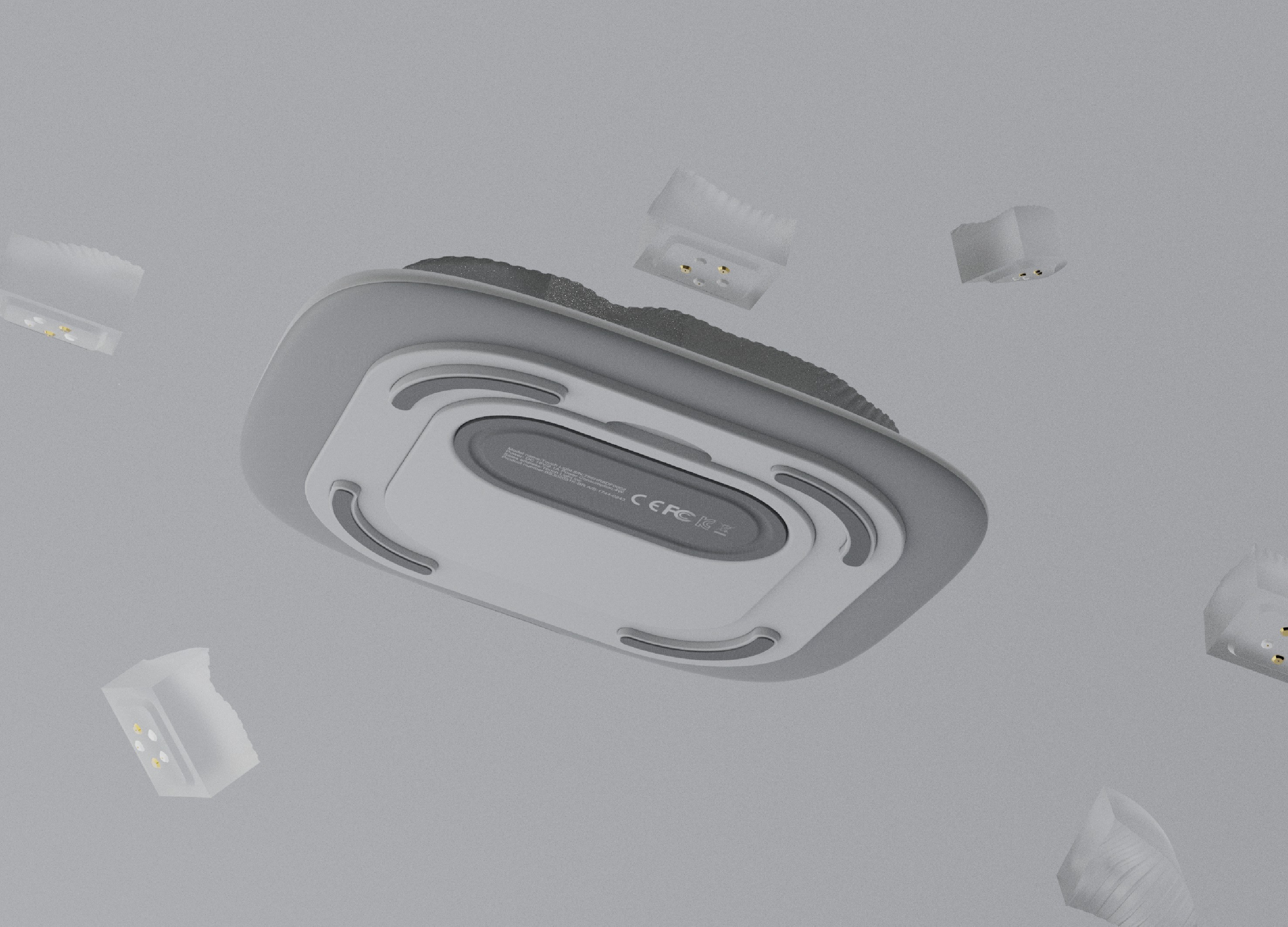
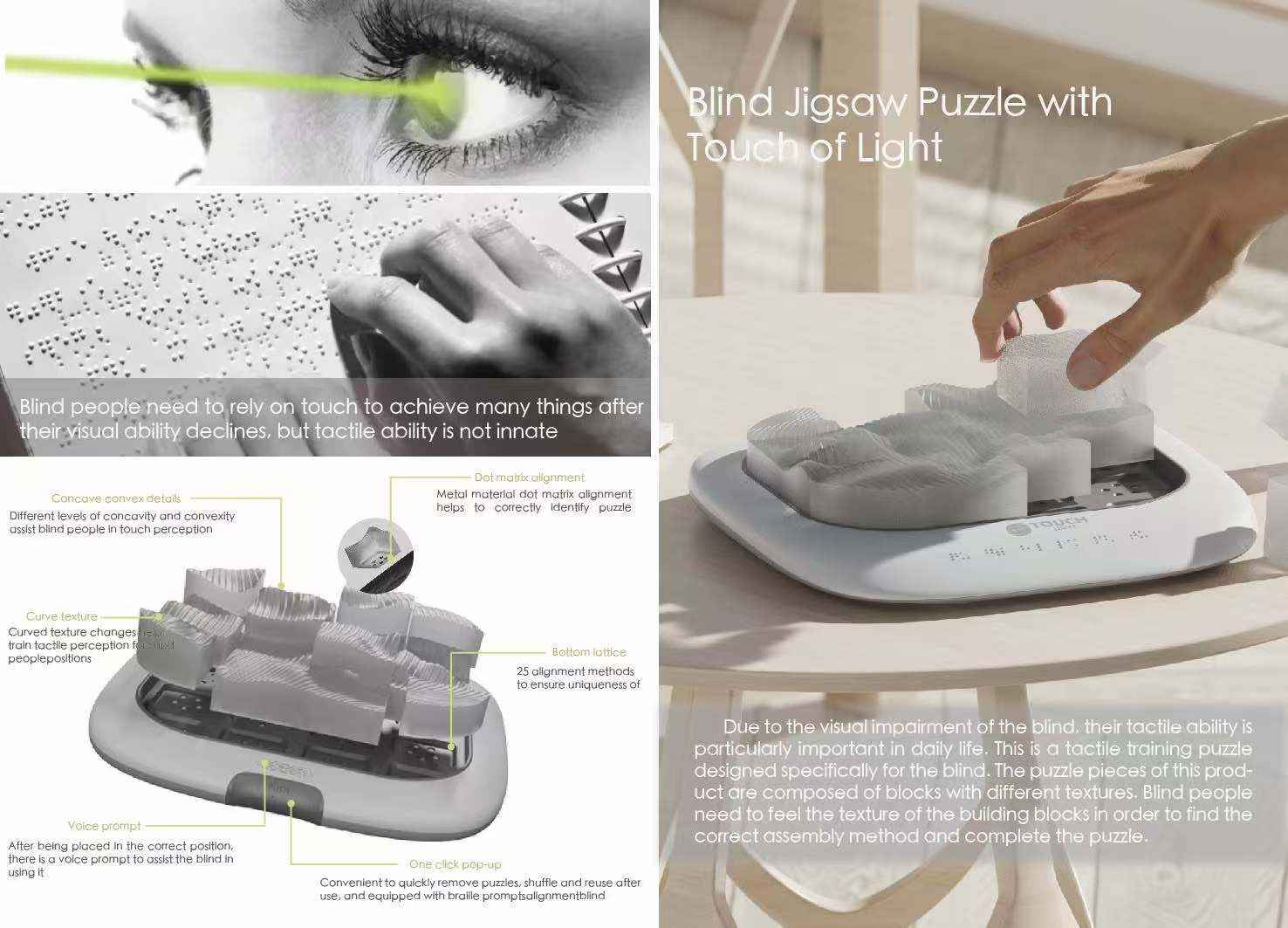
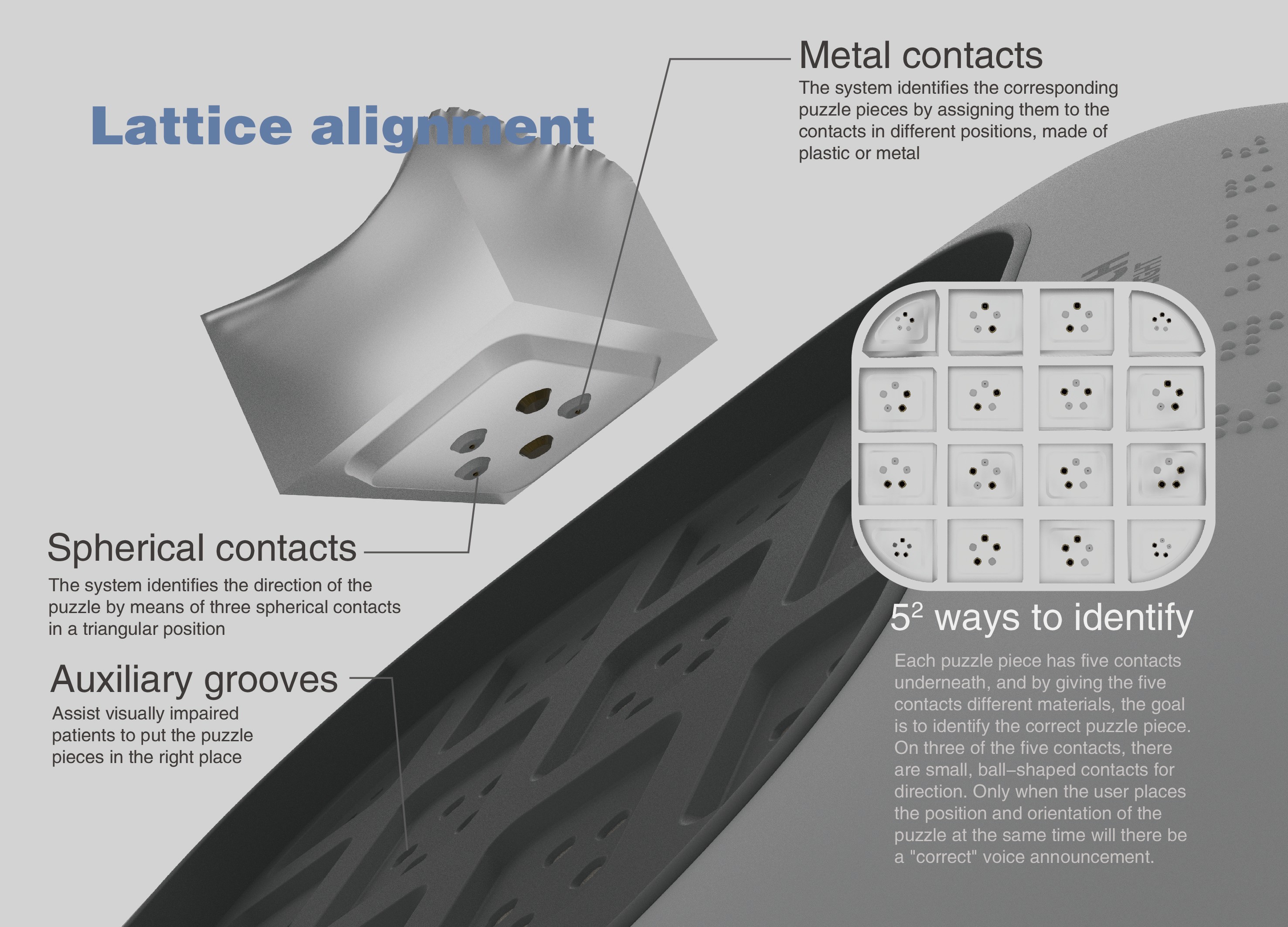
Light touch is a puzzle to help the visually impaired exercise their sense of touch and rebuild their spatial cognition. By touching and assembling, the visually impaired can "feel" the world, rehabilitate while playing, and alleviate the psychological gap. Technical principle Tactile recognition: The puzzle module has braille dot matrix and concave and convex textures, and there are also contacts at the corresponding position of the base. Assembly feedback: The contacts of the module and the base are aligned, and when the correct splicing is correct, the base will gently light up and send out a prompt sound, and the misspelling will vibrate to remind you, so that the assembly has a "response". Scene expansion: The module can simulate the shape and texture of objects in life, such as imitating fruits and furniture, and in the process of fighting, it is like "knowing" these things with your hands, integrating rehabilitation into daily life.
When communicating with rehabilitation institutions and reviewing data, I learned that the acquired visually impaired group has a large number and faces many difficulties. Traditional rehabilitation training for the visually impaired is boring and lacks attention to their psychological needs. I hope to design a product that can not only assist in rehabilitation training, but also give psychological comfort, so that the concept of "tactile training puzzle" was initially formed, aiming to help the visually impaired rebuild spatial cognition and life confidence through fun and interactive methods.
The core difference between Touch Light and similar products is that it breaks the industry status quo of "functional simplification" and "emotional separation", and achieves a triple breakthrough: The experience has been upgraded from "mechanical training" to "fun healing". Traditional visually impaired rehabilitation tools (such as tactile recognition cards and shape matching boards) only stay at the level of mechanical training of "recognition and repetition", while this puzzle transforms training into "touch narrative" through modular scene stitching (such as piecing out life scenes such as "living room" and "park"), so that users can not only exercise tactile sensitivity during the assembly process, but also evoke life memories through scene association, taking into account rehabilitation function and psychological healing.
免责申明:本文中部分图文内容转载自jamesdysonaward,相关版权归原作者及出处所有。若涉及post plant侵权,请及时联系我们,我们将第一时间删除处理。