CIID Research composed a team of designers, technologists and researchers to create an interactive exhibition about the future of energy as part of the EUROfusion consortium.
Our role was to research, conceptualise and prototype an immersive, participatory experience for visitors to engage with possible futures based on EUROfusion's social, economic, environmental and scientific research. "Escaping the Strange Loop", our prototype, integrated tangible data-based experienced and collected visitors' feedback about what kind of energy futures they want to support. We were also responsible for integrating methods of inciting dialogue, debate and critical thinking about the potential of fusion energy.
'Escaping the Strange Loop' is an interactive experience that showcases diverse stories about the role of energy in near and far futures by exploring its unpredictable and complex impacts on real life problems. In 'Escaping the Strange Loop', participants learn about different kinds of futures they could create through their group decision-making by moving through different scales of impact in multiple missions.
In this project, we had the opportunity to collaborate deeply with social, economic and environmental scientists, learning about their data models for the future. We had the great challenge of flipping the data into a meaningful, relatable experience, though that data described systemic conditions far in the future. Through deep research, prototyping and collaboration, we created the exhibition based on several key principles for our design team:
Embrace complex futures. Make data tangible. Uncover diverse futures. Explore deep time.
We conceptualised, built, tested and repeated many times to find the right combination of playful yet resonant, always striving to do justice to the data we were working with. The stories and decisions within each mission are based off of social, economic and environmental models of different pathways of our energy-dependent futures. We use the logic of three foundational scenarios about our energy futures. The scenarios come from our partner, EUROfusion, and their TIMES Model (ETM) that holds storylines from 2010 to 2100 across varying degrees of environmental responsibility, energy technology investments and international cooperation.
We crafted three scenarios -- punctuated by time spans and enriched by environmental impacts such as air quality, temperature of the planet and sea level -- into a branching tree of stories that held many possible decision-paths. Once we had created this tree of stories, we shaped it with a structural logic of three: three rings hold different jumps into the future and each of these three rings holds a different guiding principle (human, infrastructure and finally landscape level). Within each ring, the stories are presented through videos, objects and sculptures. In this way, we transitioned from data in a 2D spreadsheet to experiences in a 3D space. We researched and worked through multiple types of data-based story-telling in order to write the final stories.
'Escaping the Strange Loop' is designed for three people at a time. The trios become teams who collaborate, discuss and decide throughout the missions. They begin with an immersive onboarding, and then continue into the installation-game, progressing through three missions. The missions present different levels of society and timespans. After experiencing each mission, they discuss and decide which path they will continue to follow. Their decisions are fed into our system which outputs custom stories according to the team's trajectory through time. At the end of their missions, they observe the result of their choices and reflect on how they impacted the world in each round, and cumulatively. Once they leave the game space, the players can access a website that shows the many possible journeys they might take and welcomes their input about other stories that might branch off of the structure.
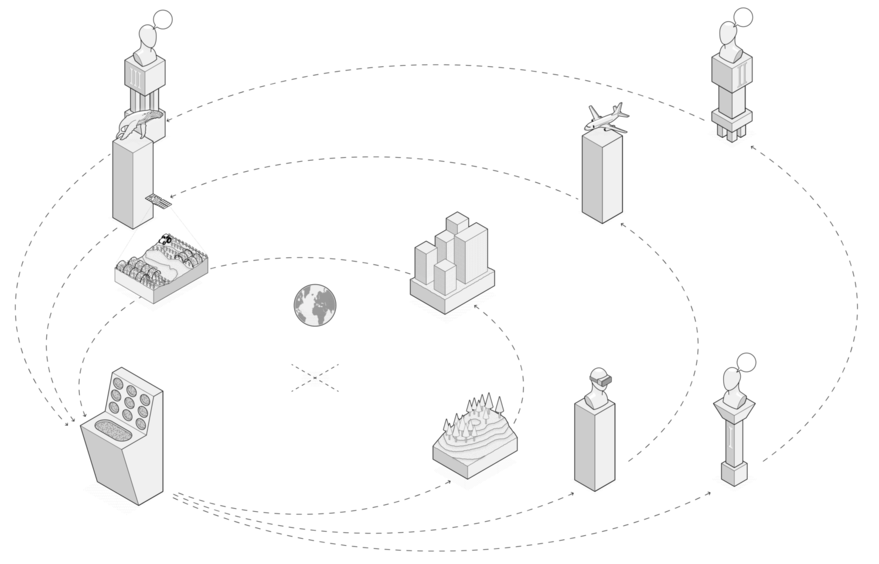
Final exhibition framework Each ring designates a different level of time and society - from 2040 and human (exterior) to 2080 and landscape (interior)
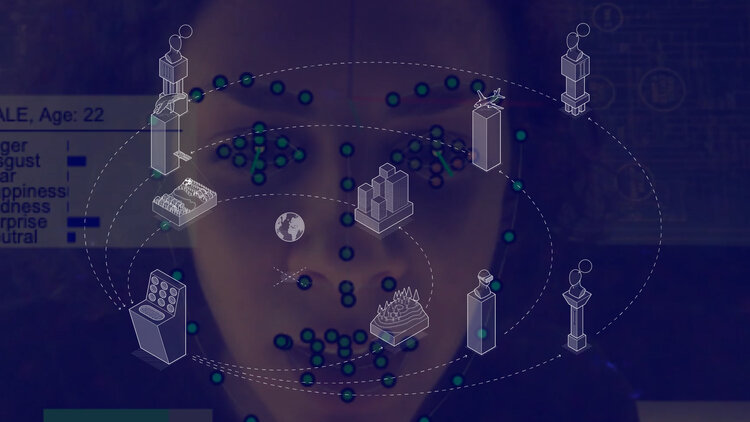
Mission 1: Human Perception After being introduced to the general game, the participants embark on Mission 1, which is located in the outermost ring of the Strange Loop. They hear about the human level perception of the events happening in 2040 from multiple points of view (3 separate individuals).
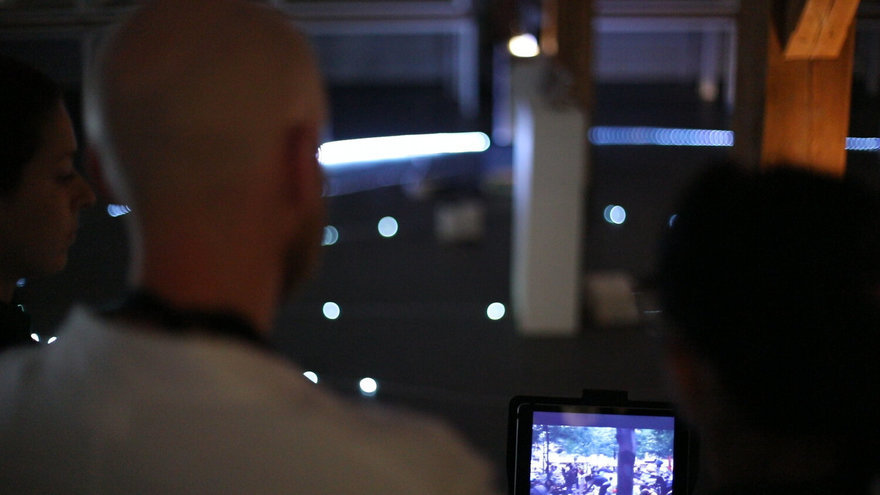
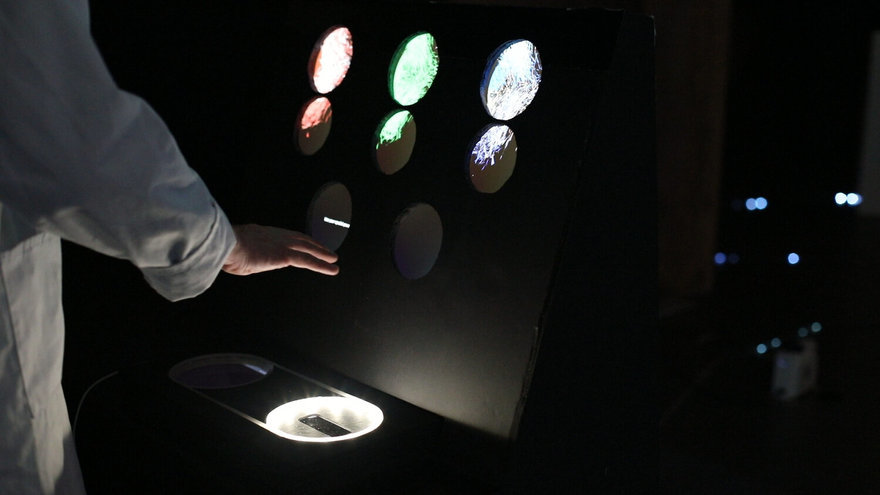
Decisions After each mission, the participants circle in to the "Decision Station" where they find a summary of the information from the previous mission. The decision station uses a virtual facilitator, "gaia.ai", who guides the participants to reflect on what they learned and make decisions for the next round. Gaia.ai invites the players to discuss on the three point of view they heard from on their mission, to uncover more information with their super powers and to have another discussion.
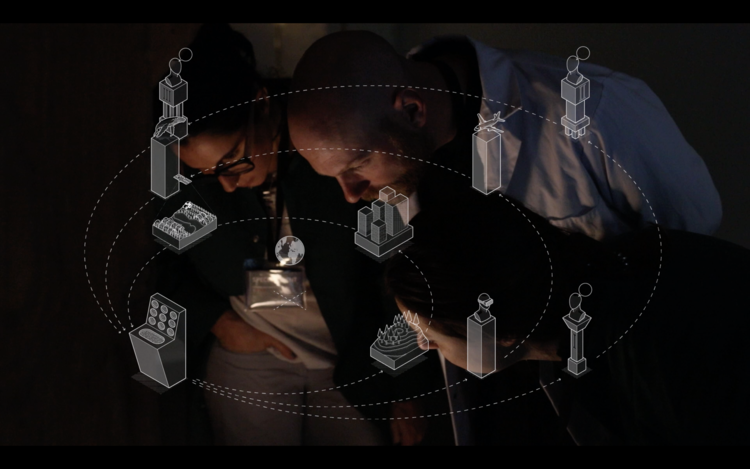
Mission 2: Infrasture In Mission 2, visitors take a look at the infrastructural changes that have happened in the world in 2080 because of their previous decision. Here they view different objects, artefacts that have become part of daily life.
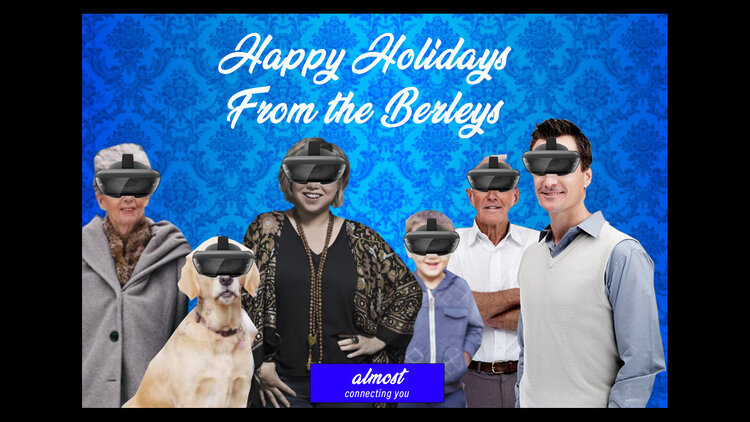
Mission 2: Almost In a world where travel is unfathomably expensive for our wallets and the planet, we will need to "travel" to see our friends and family in virtual reality.
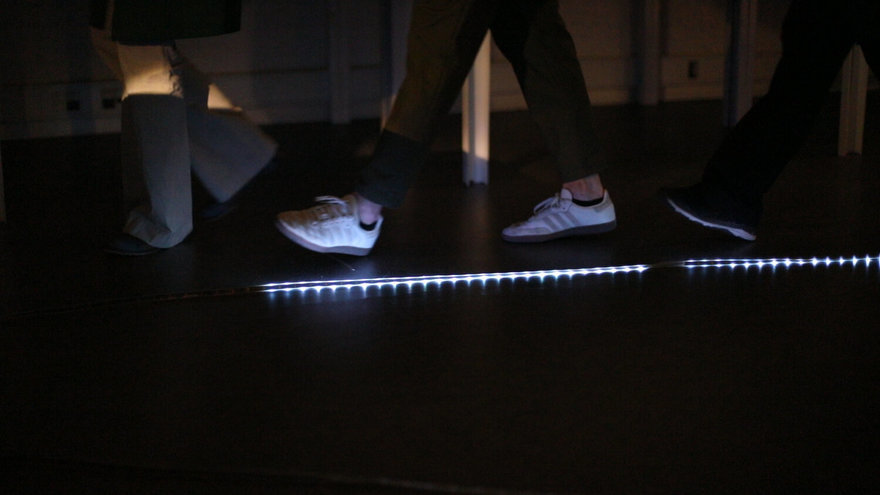
The Path Participants were guided through each mission and point of view with a reactive LED path.
Mission 3: Landscape In Mission 3, the third loop around the installation, visitors experienced the landscape level implications of their decisions.
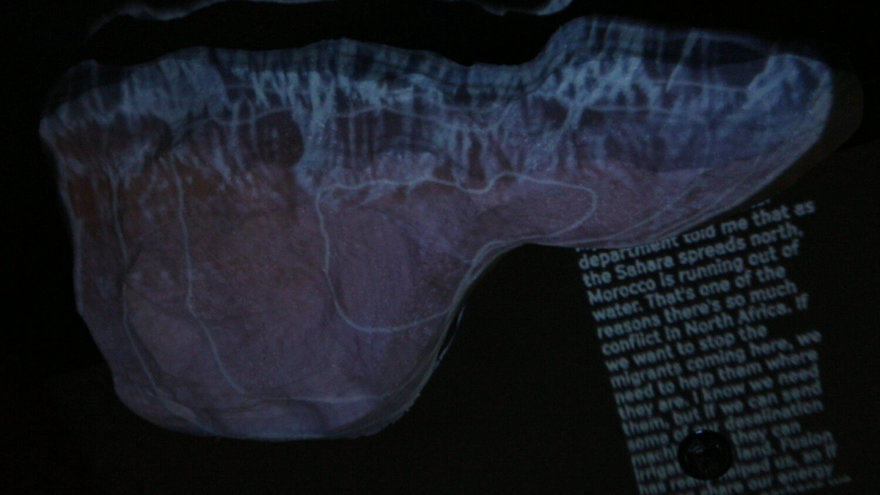
Mission 3: Landscape In Mission 3, they saw and heard about how the earth was being re-shaped - for example:"My family business has been running for 12 generations now. Our planning algorithm is recommending that we stop growing crops and use the new fusion energy to manage data centres. We can even sell our leftover diesel and gas to people in India. It's risky but if we do it we can make a fortune. Of course there's the risk that everyone else does the same, and we have no food."
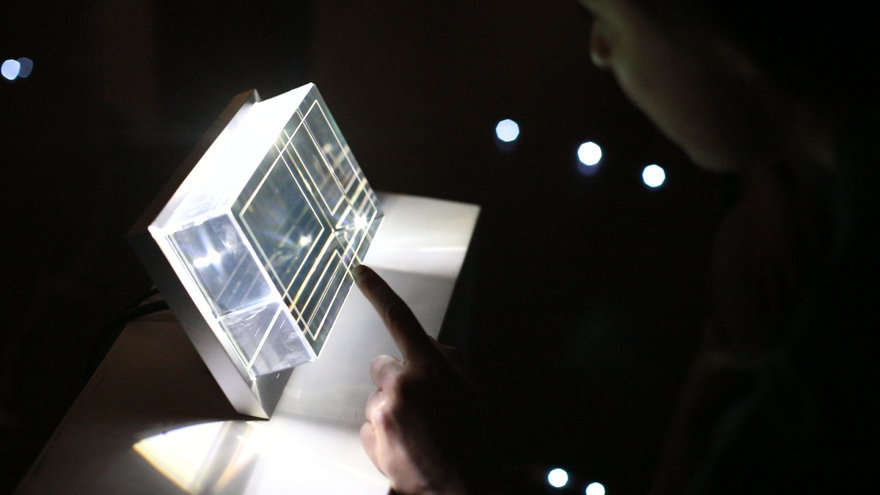
Reflection: Centrepiece After completing the final mission and decision, the participants will be guided to the centrepiece, which is a tangible 3D globe that gets clearer as the players approach the centre. Mission after mission, the centrepiece builds up layers that visualise the cumulative effect of the players' choices on a world map.
As we detail below, there are 4 key elements that compose the experience:
1) Onboarding 2) Three missions 3) Guided decision-making 4) Reflection
Onboarding
Participants begin by being "onboarded" and learn about the goals of the game, their role and how they will play.
Introduction
Before the missions begin, participants hear about the state of the world and are prepared for their first ring around the Strange Loop. They are introduced to their guide, "gaia.ai" who emanates from the Decision Station (composed of multiple points of view and decision-making logics). This video shows the way that the introduction unfolds.
Mission 1
After being introduced to the general game, the participants embark on Mission 1, which is located in the outermost ring of the Strange Loop. They hear about the human level perception of the events happening in 2040 from multiple points of view (3 separate individuals). For example:
"The carbon taxes that they put in place affected the poor the most. That's why there's been so much rioting for the last year. I'm out here today protesting because things are not working in our society. We can't just go green and increase taxes on fossil fuels because people will lose their jobs. We need to put in place proper policy and focus on matters closer to home. Amsterdam used to be a great city, but they say we will soon be underwater as the sea level rises. Switching to renewables can help prevent this, but nothing will change if we don't follow the political systems we put in place."
Mission 2
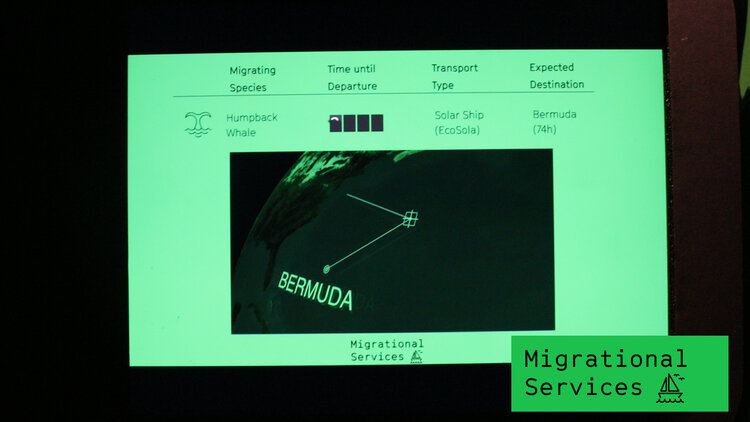
In Mission 2, visitors take a look at the infrastructural changes that have happened in the world in 2080 because of their previous decision. Here they view different objects, artefacts that have become part of daily life. One of the infrastructural services they might experience is Migrational Services:
"Migrational Services help me get back home in a completely carbon free way, without disturbing other species which is really important to me. They sent me this kit to prepare for my travel - they automatically calculate the greenest options for me which means travel takes a long time. I've been waiting 3 months, but now it's less than a day until I can depart - the Humpback Whales have nearly finished migrating!"
Mission 3
In Mission 3, the third loop around the installation, visitors experienced the landscape level implications of their decisions. They saw and heard about how the earth was being re-shaped - for example:
"My family business has been running for 12 generations now. My daughter will take over soon and while business is good I want to make sure she has a good start. Our planning algorithm is recommending that we stop growing crops and use the new fusion energy to manage data centres. We can even sell our leftover diesel and gas to people in India. It's risky but if we do it we can make a fortune. Of course there's the risk that everyone else does the same, and we have no food."
The Centre
After completing the final mission and decision, the participants will be guided to the centrepiece, which is a tangible 3D globe that gets clearer as the players approach the centre. Mission after mission, the centrepiece builds up layers that visualise the cumulative effect of the players' choices on a world map. The map is shown through a hologram of earth, providing a qualitative visualisation of the Reasons for Concern of the IPCC, such as distribution of impacts, extreme weather events, etc. At the end of such an immersive and intense experience, we encourage the participants to pause and reflect at the centrepiece. The surrounding space resets into peaceful sound and light, enabling the participants to observe, reflect and discuss the result of their choices.
Game Structure
Our goal was to make the concept and prototype for an interactive, transmedia, participatory game that would allow for exploring a tree of possibilities of the future by moving through the physical space of the installation. Each participant played a different role, learning about and challenging one another's preconceived ideas or opinions about the impacts of energy, sparking a lively discussion throughout the experience. We researched and prototyped many game-like experiences around energy and culled from them the basic principles of role-play, structured decision-making and a progressive challenge that morphed over the course of the game through missions on various levels of society.
Spatial Design
The spatial design was inspired by the feeling of being stuck in a strange loop. The installation shows what kind of media people could experience throughout the game, and gives structure to how they should move through the game, but the look and feel of each touchpoint is only a gesture at what the end experience should be. The game experience is installed in space - therefore each round of the game is not played in cards on a table, rather it is a game experience that you move through. The spatial design was inspired by the concept of a "strange loop" - which is a cyclic structure that goes through several levels in a hierarchical system [ref: Dark Ecology, Timothy Morton]. It arises when, by moving only upwards or downwards through the system, one finds oneself back where one started. Visitors moved in time scales and through societal levels while moving in a circular way around the room in a meditative, reflective way.
Our process
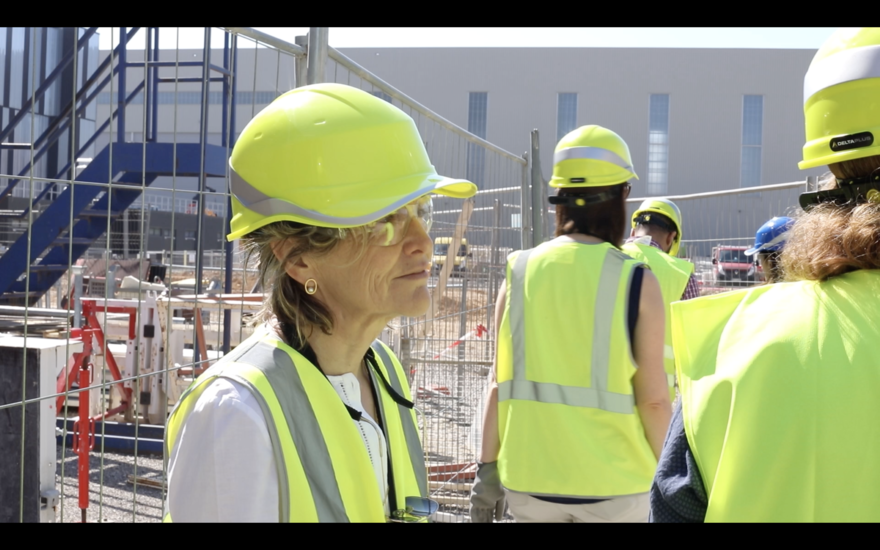
We had the opportunity to work closely with physicists, economists and social scientists who are all experts in fusion energy. We also made field visits to the fusion energy development sites - JET and ITER - in order to interview and co-create with our stakeholders. Based on this research as well as our own desk research, we came up with a set of principles for the exhibition to be based on that range from overcoming nuclear stigma to ensuring that diverse participants would relate to the exhibition. With these principles we built a series of tangible and audiovisual prototypes to test different storytelling strategies with potential audiences. Along the way, we researched many topics - including how to futurecast and create stories in deep time.
Technical Implementation
The graphical and audio outputs run on websites controlled by a central processor site, which communicates with each output through real-time firebase. We also used Google webkit's speech recognition software and three.js. The responsive LED path is controlled by the central processor site through firebase to Arduino via node.js.
Collaboration
We undertook the foundational research, conceptualisation, founding principles and working prototype for a traveling exhibition that is part of the multi-faceted work of EUROfusion - a consortium of national fusion energy research institutes located in the Europeanunionand Switzerland. The consortium is currently funded by the Horizon 2020 programme. The other portions of the traveling exhibition communicate what fusion energy is and demonstrate the cutting edge science that is behind it.
免责申明:本文中部分图文内容转载自Designawards,相关版权归原作者及出处所有。若涉及post plant侵权,请及时联系我们,我们将第一时间删除处理。