
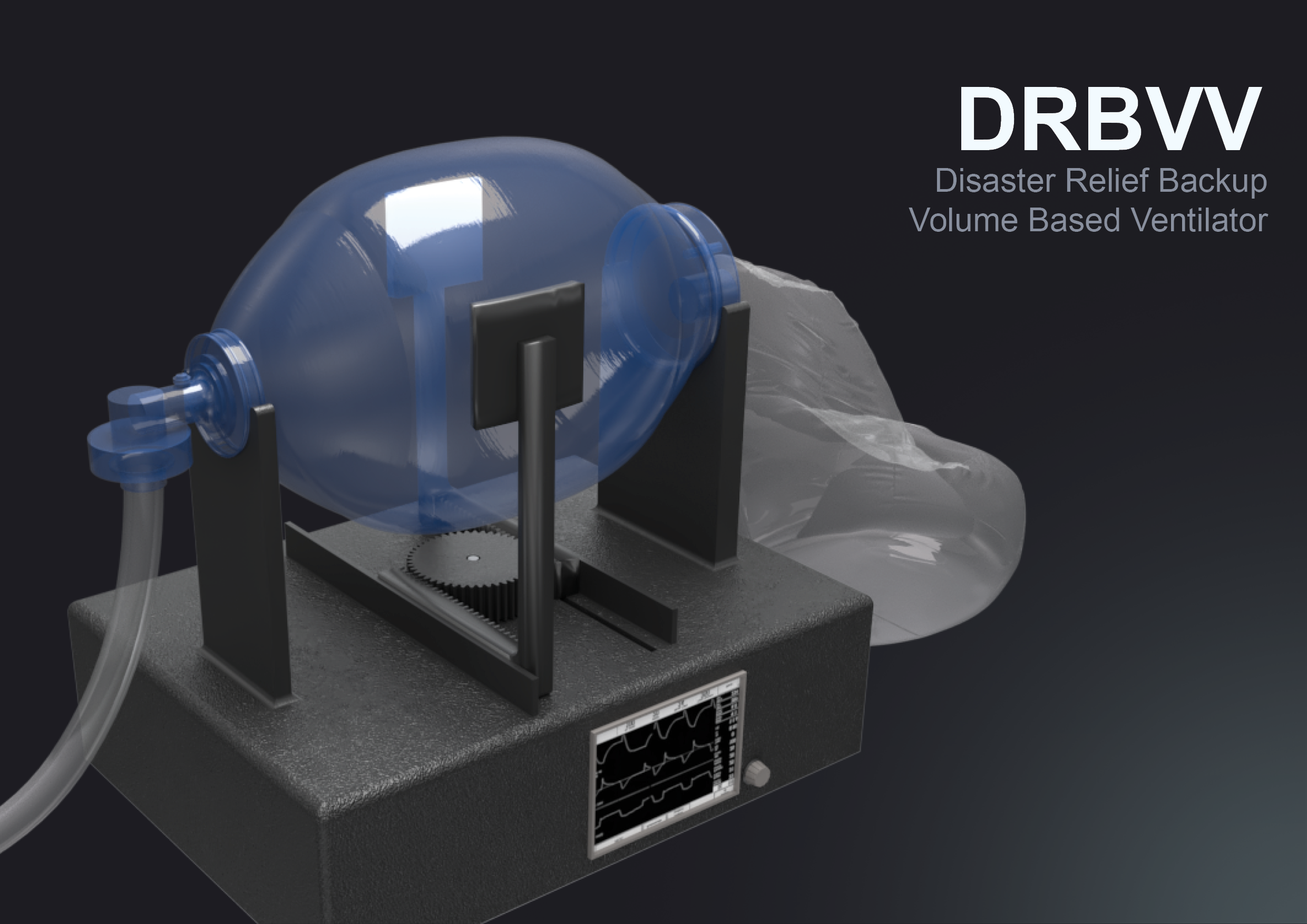
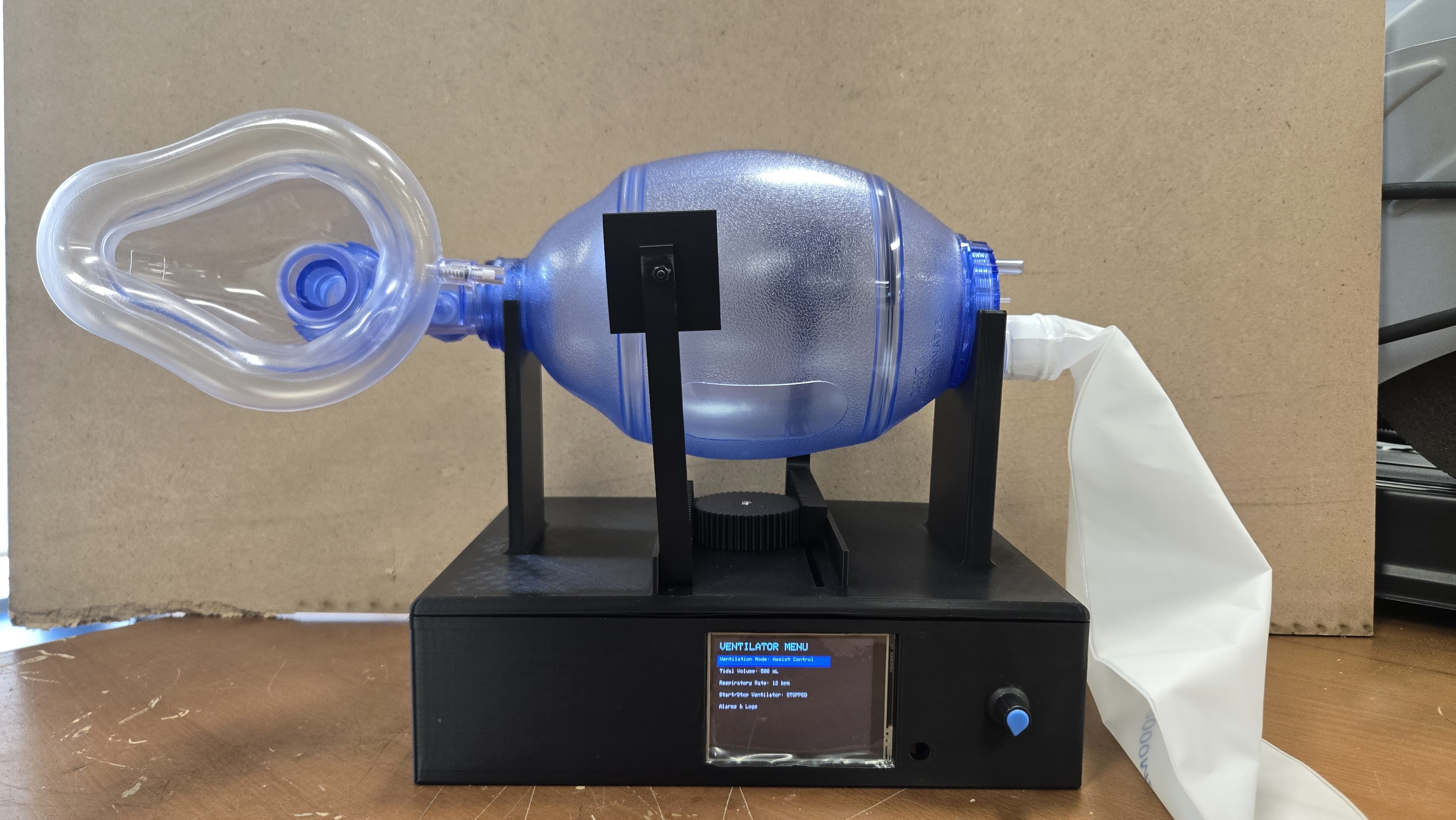
A portable emergency ventilator that compresses an Ambu bag to deliver controlled breaths. Features include Assist Control mode, adjustable tidal volume, respiratory rate, I:E ratio, touchscreen UI, battery power, and scalable PCB + DIY support.
During the peak of the COVID-19 pandemic in 2020, we witnessed critical ventilator shortages worldwide. It became clear that hospitals and emergency response teams lacked affordable, scalable backup options. I was inspired by MIT’s open-source ventilator initiative, which showed the potential of DIY solutions. However, most lacked readiness for real deployment. This sparked the idea to develop a portable, volume-controlled emergency ventilator with both DIY and mass-manufacturable PCB options. The goal is to create a reliable, low-cost solution for disaster relief, rural clinics, and overwhelmed healthcare systems globally.
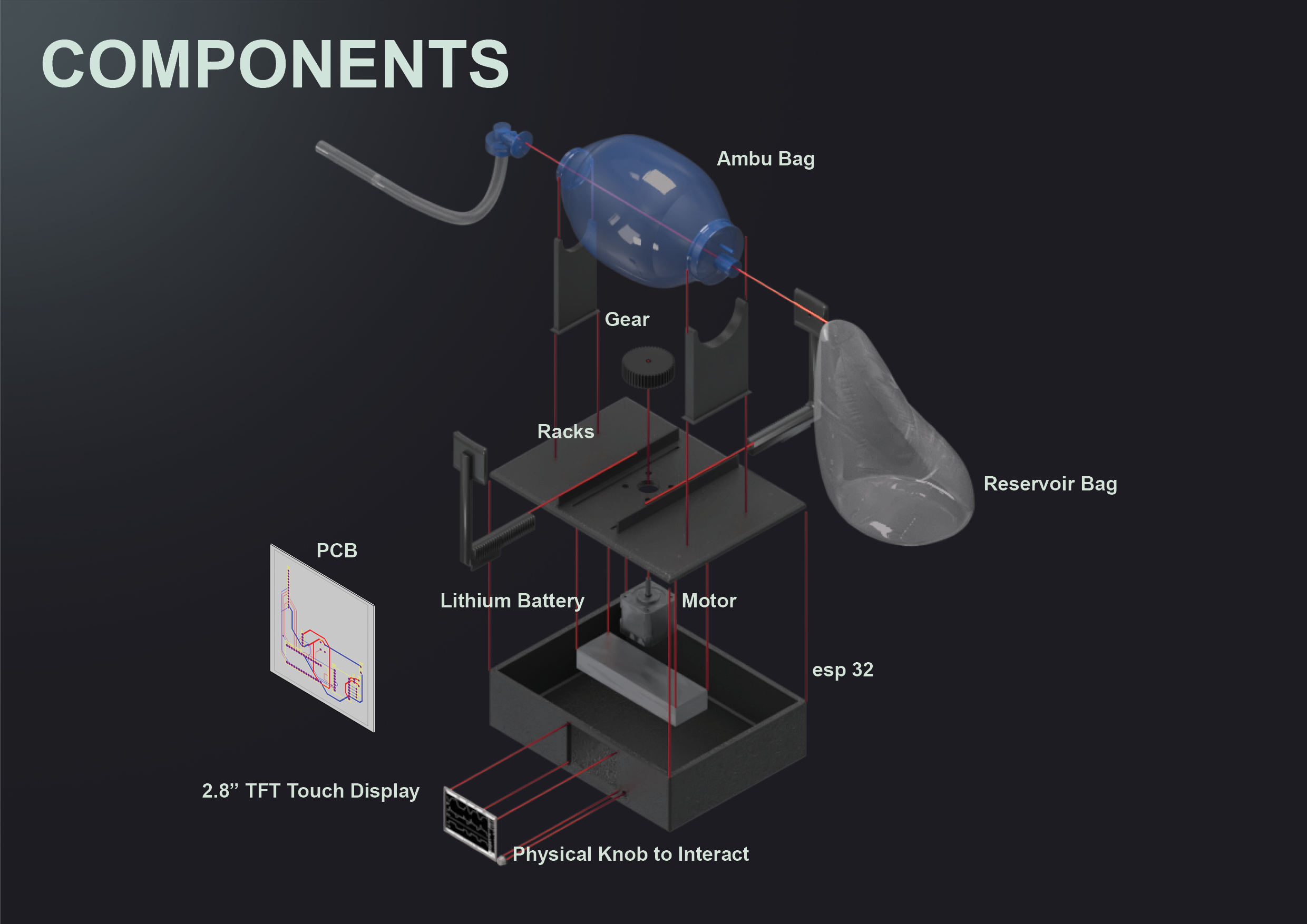
The ventilator uses a motor-driven mechanical system to repeatedly compress an Ambu bag, which pushes air into a patient’s lungs. A gear and rack mechanism converts the motor’s rotation into linear motion to mimic human breathing. Users can adjust critical settings like tidal volume (how much air is delivered), respiratory rate (how many breaths per minute), and the I:E ratio (inhalation-to-exhalation time) via a touchscreen and rotary knob. An ESP32 microcontroller manages the system, displaying real-time values and alarms. It runs on a lithium battery, with both a DIY breadboard version and a production-ready PCB available for different use cases.
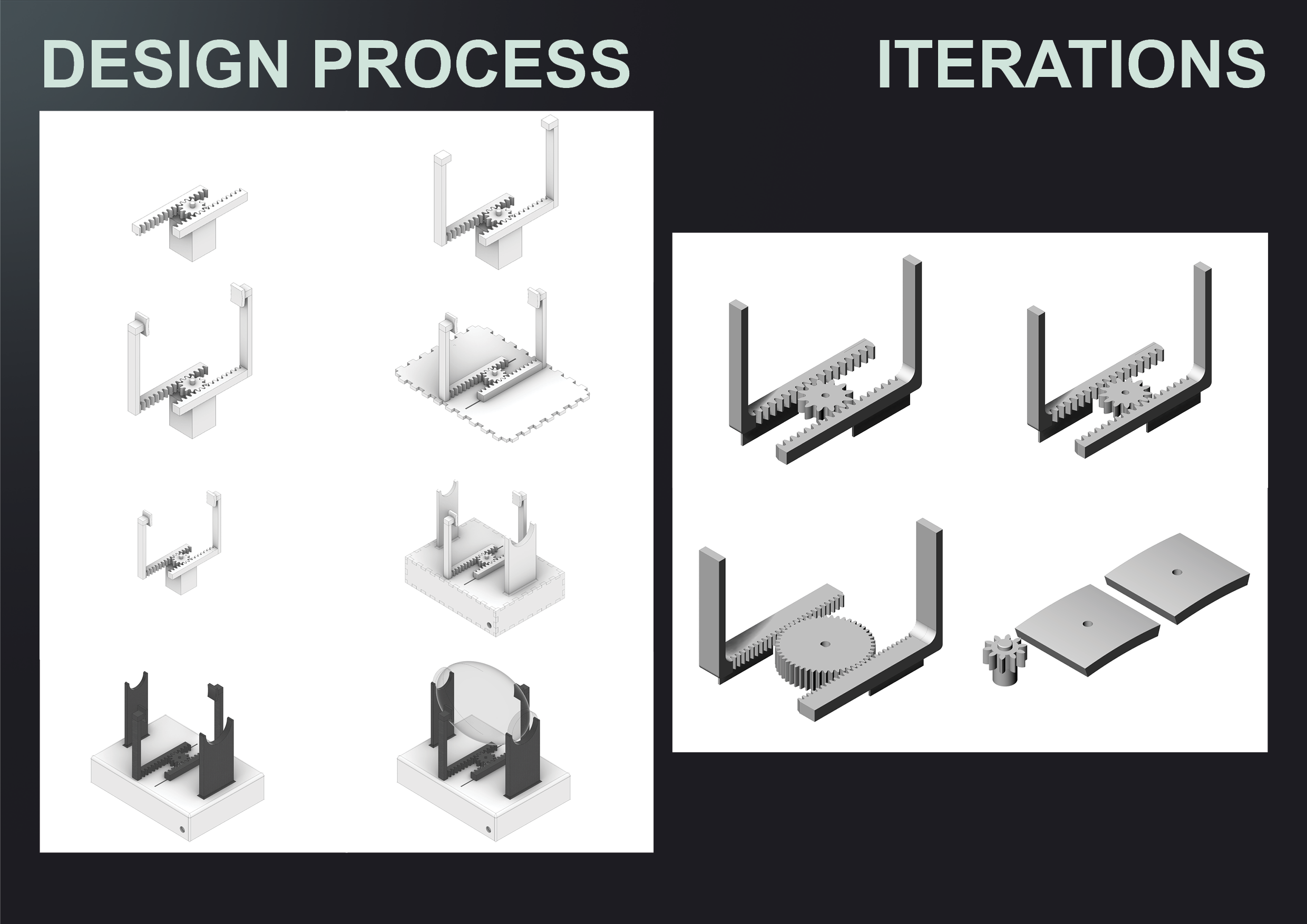
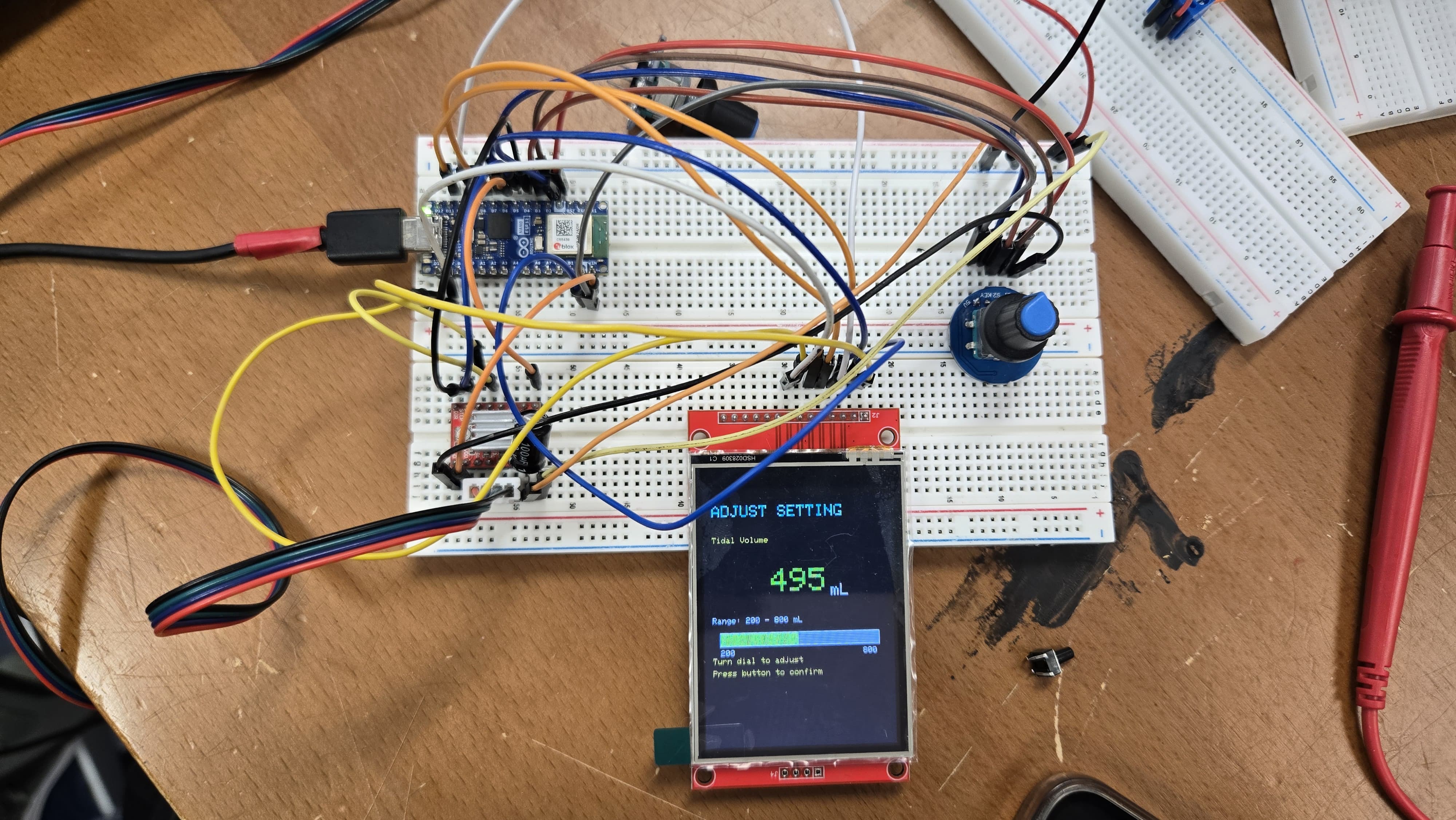
The design began with a simple linear rack to compress an Ambu bag. Through multiple 3D iterations, we refined the mechanical setup using a rack-and-pinion system to ensure smooth, repeatable motion. Each prototype improved structure, gear stability, and ease of assembly. The electronics were developed in parallel with a 2.8” TFT touchscreen and rotary knob interface for adjusting tidal volume, respiratory rate, and I:E ratio. We tested the system using a silicone test lung to verify air delivery and timing accuracy. On the electronics side, we encountered setbacks—blowing multiple buck-boost converters while trying to integrate a lithium battery with the ESP32 Nano. Despite these issues, the UI, I/O, and core logic are fully functional on both breadboard and PCB versions. While limited time prevented final deployment, the system is 85% complete and only requires tuning for consistent real-world use.
While our current prototype shares functionality with existing DIY ventilators, what sets this project apart is its vision for modularity and adaptability. Each component—from the racks and gears to the electronics and casing—has been designed to be easily replaceable and customizable. This makes it ideal for low-resource or emergency scenarios where standard parts may not be available. Users can swap components, upgrade modules, or repair it with minimal tools. The inclusion of both a breadboard-based DIY version and a scalable PCB supports a wide user base, from hobbyists to field hospitals. This flexibility makes the design more sustainable and future-proof, perfect for disaster relief, rural clinics, and global health emergencies.
免责申明:本文中部分图文内容转载自jamesdysonaward,相关版权归原作者及出处所有。若涉及post plant侵权,请及时联系我们,我们将第一时间删除处理。