
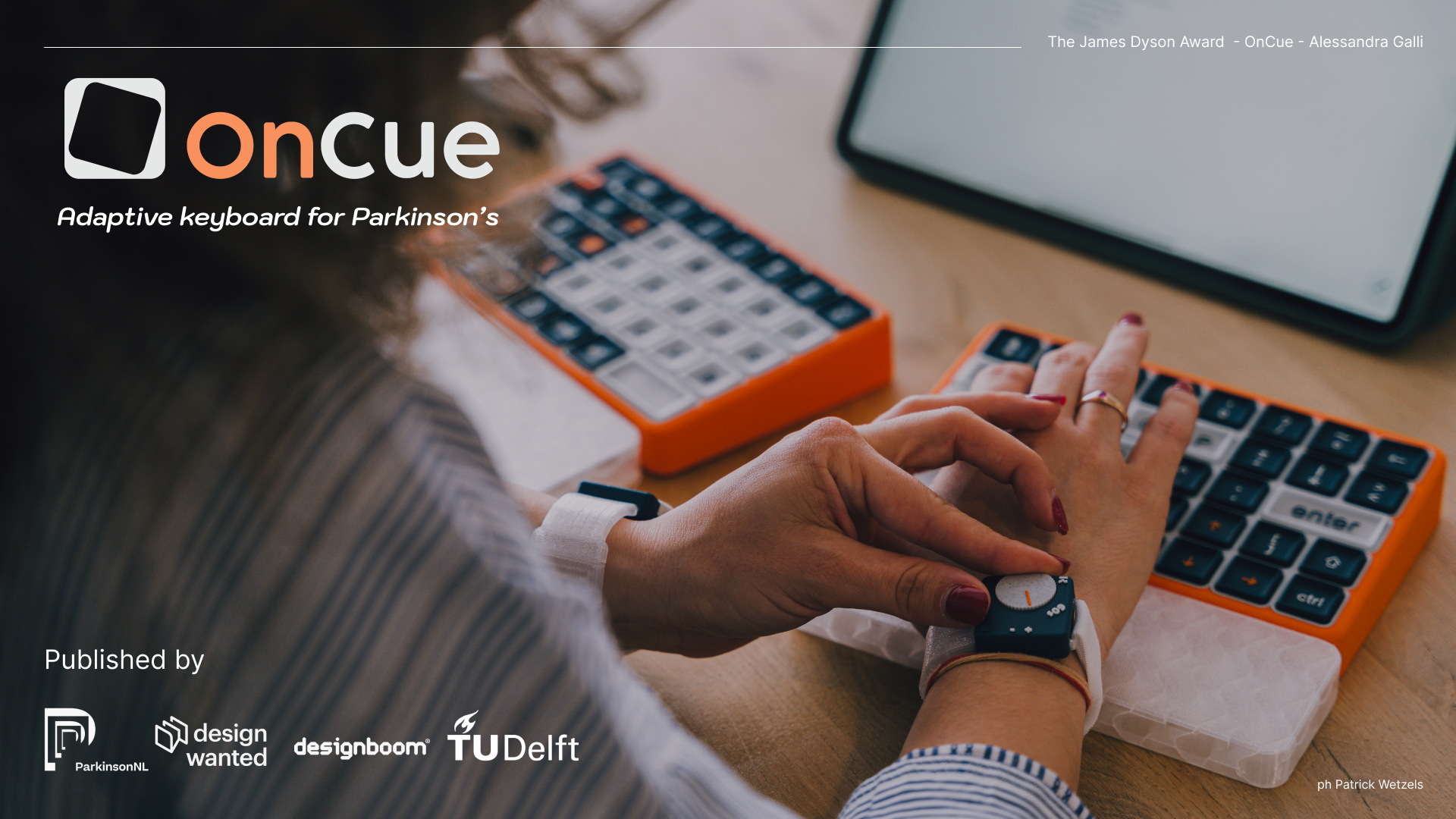
OnCue is an adaptive keyboard with haptic wristbands that ease Parkinson’s symptoms. By turning typing from a frustrating, error-filled task into an accessible activity, it enhances quality of life in an increasingly digital world that must belong to everyone.
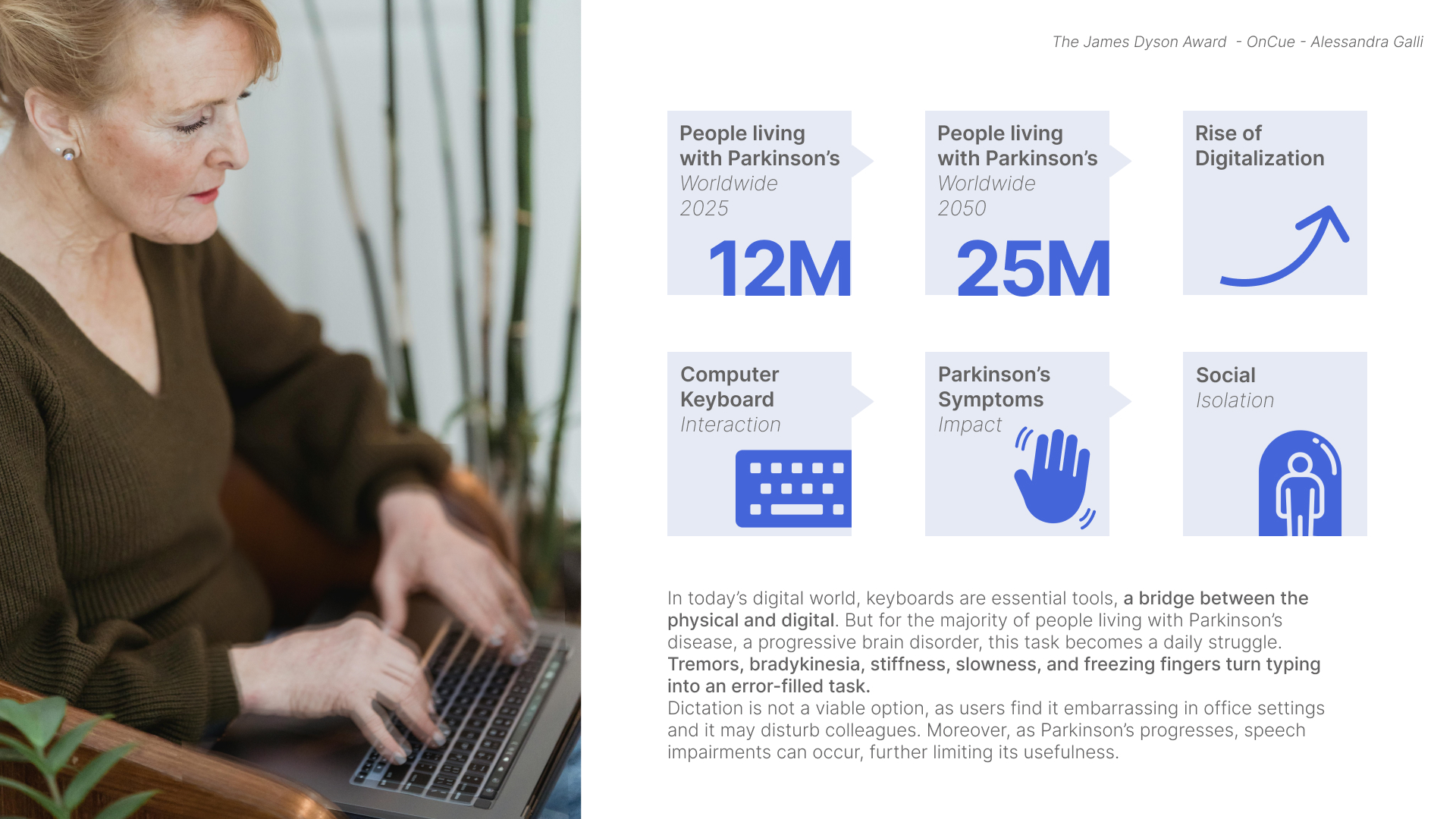
OnCue is the result of my Master’s thesis at TU Delft, developed in collaboration with ParkinsonNL to promote the integration of sensory cues and raise awareness of the typing challenges faced by people living with Parkinson’s, a neurodegenerative condition affecting 12M people worldwide. Its prevalence is expected to exceed 25M by 2050, a 76% increase from 2021. Through interviews, I learned how improving keyboard interaction can help people feel more independent and less frustrated. What I take for granted is, for them, a real obstacle. That contrast inspired me to continue beyond graduation, committed to making this project a reality.
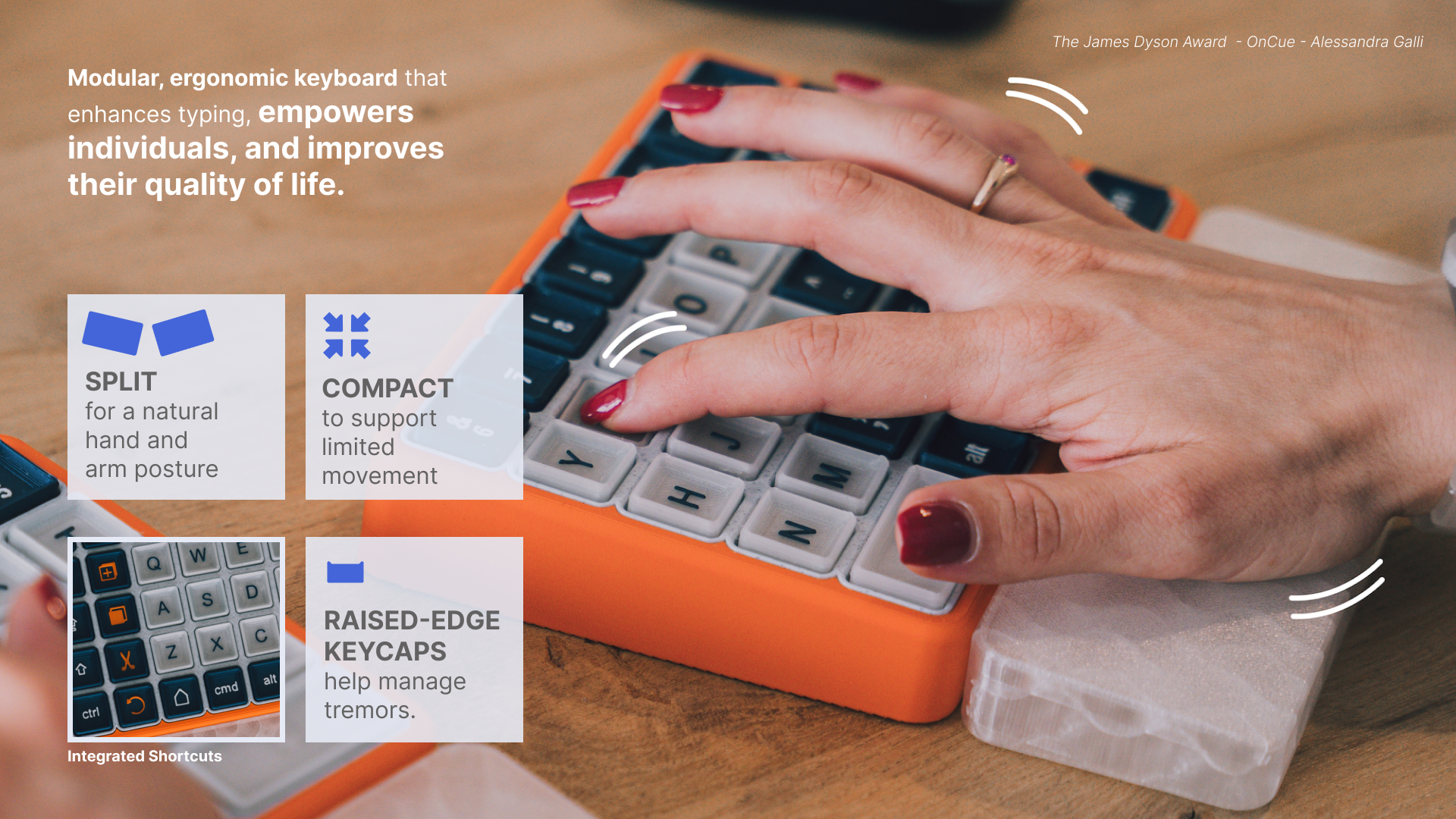
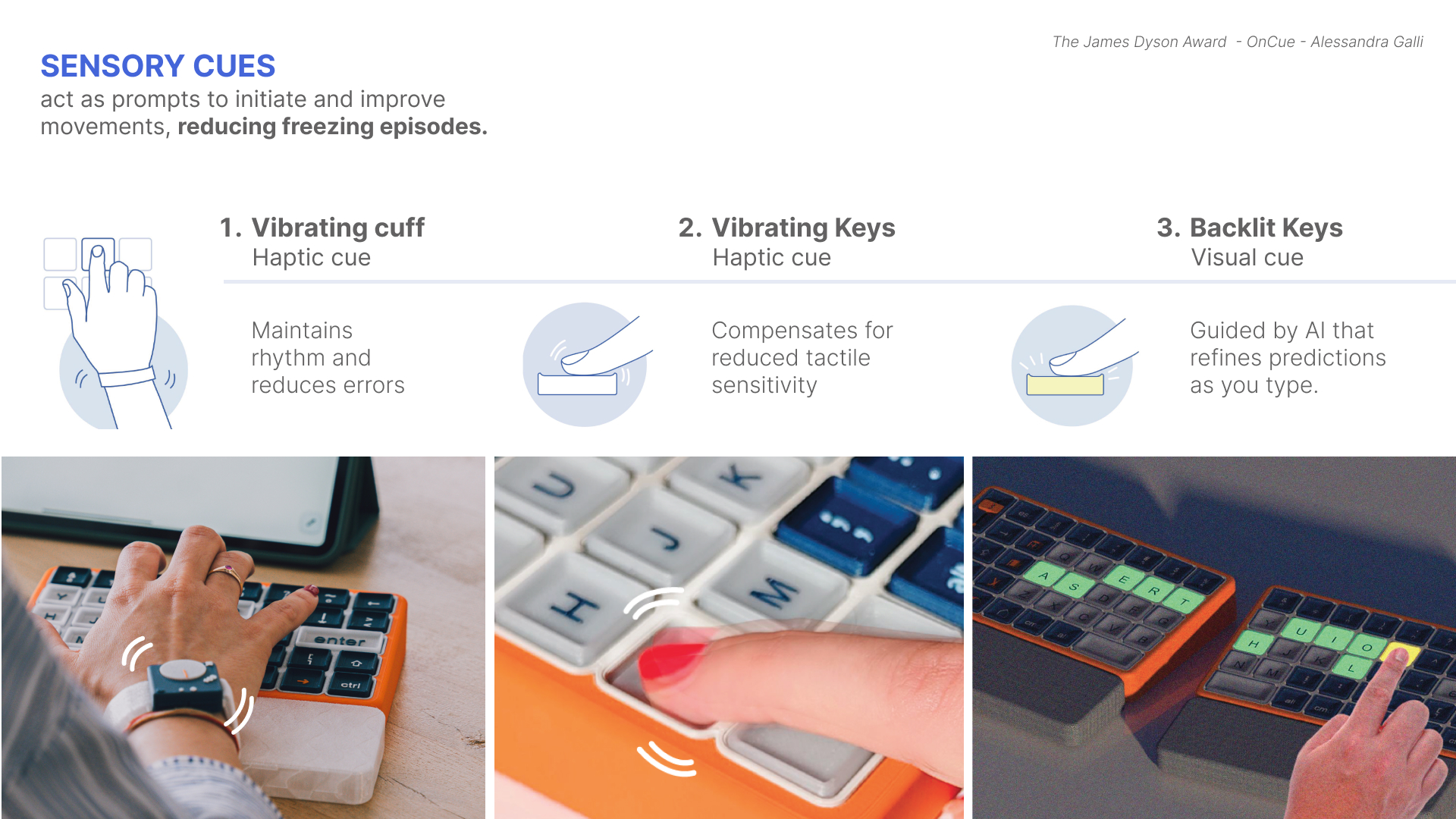
OnCue addresses Parkinson’s symptoms of tremors and bradykinesia, a condition that slows movement and impairs fine motor control. It combines ergonomic design with haptic and visual feedback, external sensory signals that support movement execution. Subtle vibrations in the keys and wristbands help maintain typing rhythm and compensate for reduced tactile sensitivity, while an AI lighting system highlights suggested letters, reducing errors and freezing episodes. Its compact split layout encourages natural posture, reduces motion range, and minimizes finger fatigue. Raised-edge keycaps guide finger placement and prevent accidental presses, while built-in shortcut keys simplify use. Fully customizable, OnCue adapts to individual needs, offering a personalized experience. It also includes software for advanced feature customization, crucial for a complex condition like Parkinson’s, where symptoms and their intensity can fluctuate throughout the day.
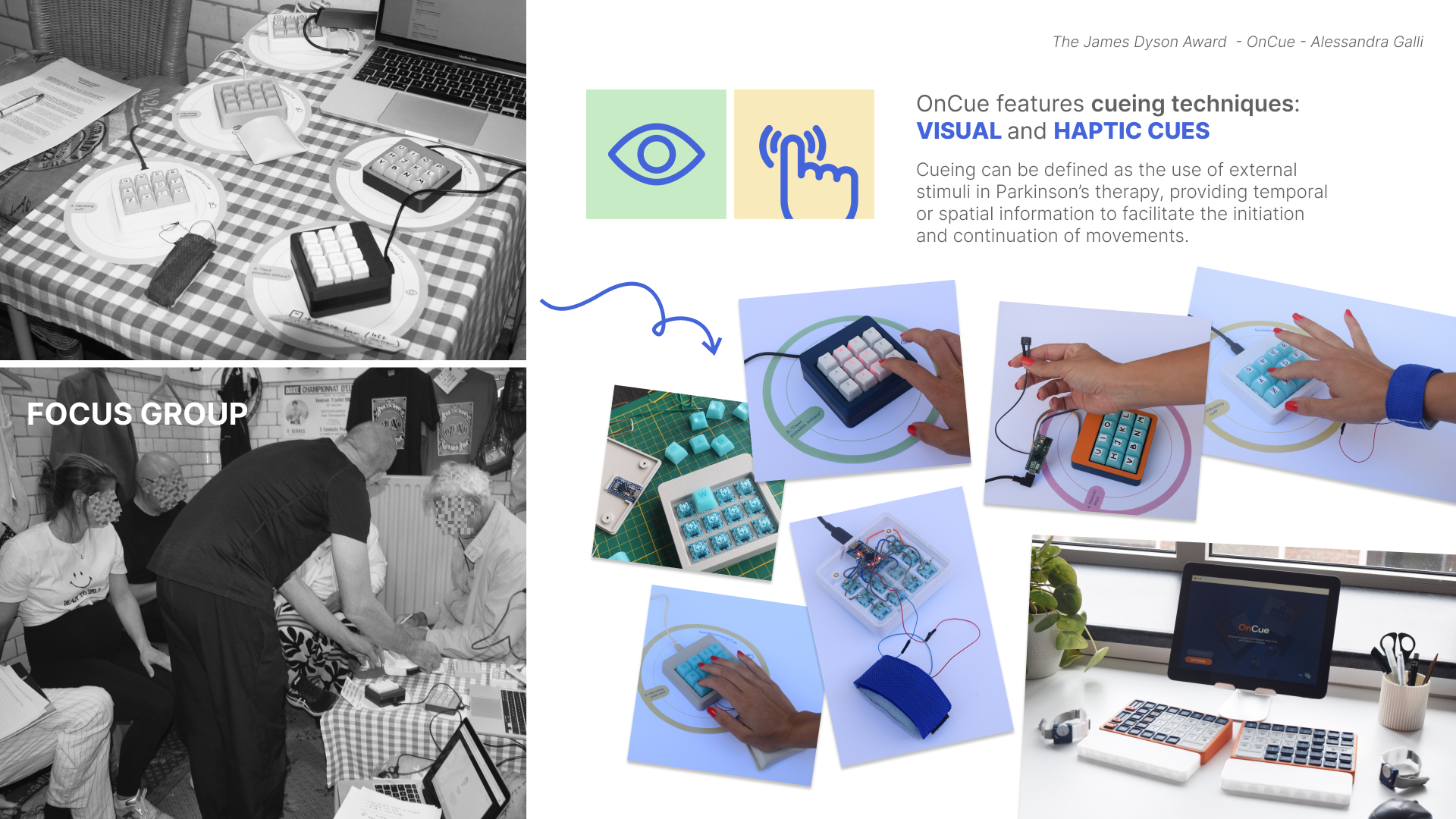
OnCue started as a thesis project from May to October 2024, focusing on research, iterative prototyping, and early user testing. This phase helped me clarify the needs of people living with Parkinson’s and confirmed OnCue’s potential to improve keyboard interaction. Several functional prototypes were developed and tested with ten people living with Parkinson’s, who provided valuable feedback and encouraging results. The project culminated in a full-size working prototype, marking the completion of my Master’s in Integrated Product Design at TU Delft and kicking off the business development phase. In early 2025, I expanded the network and deepened user research through interviews with people with Parkinson’s and healthcare professionals. OnCue was then showcased at the Delta Medical Conference in Delft (Netherlands) and at Milan Design Week, gaining exposure and additional feedback. I was also invited to speak at a webinar on tremors, highlighting its potential to help other groups facing similar motor symptoms.
Currently, no keyboards integrate cues or are specifically designed for people with Parkinson’s as primary users. While cueing is common in assistive walking devices, it has yet to be applied to digital interaction. Existing assistive keyboards typically address a single motor impairment and overlook the complexity of Parkinson’s symptoms, while gaming keyboards are built for speed without therapeutic value. OnCue fills this gap by combining cues with ergonomics, recognizing that only their integration can provide effective support. Unlike clinical treatments that are invasive or unreliable during “off” periods, OnCue is tailored to real-life symptom variability. Moreover, focus group participants reported that dictation is not a viable alternative, as it is cognitively demanding and embarrassing in office settings.
免责申明:本文中部分图文内容转载自jamesdysonaward,相关版权归原作者及出处所有。若涉及post plant侵权,请及时联系我们,我们将第一时间删除处理。