
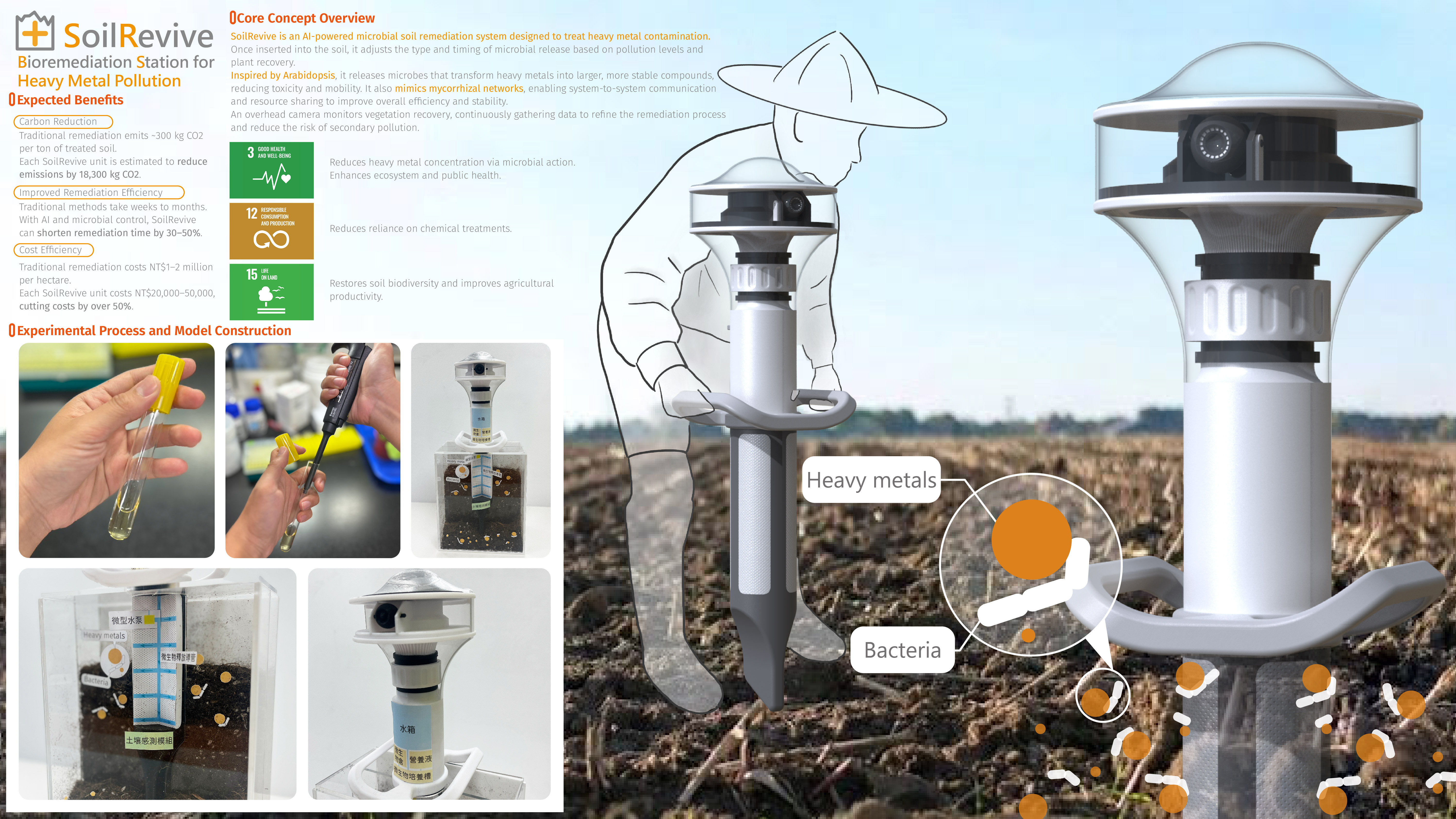
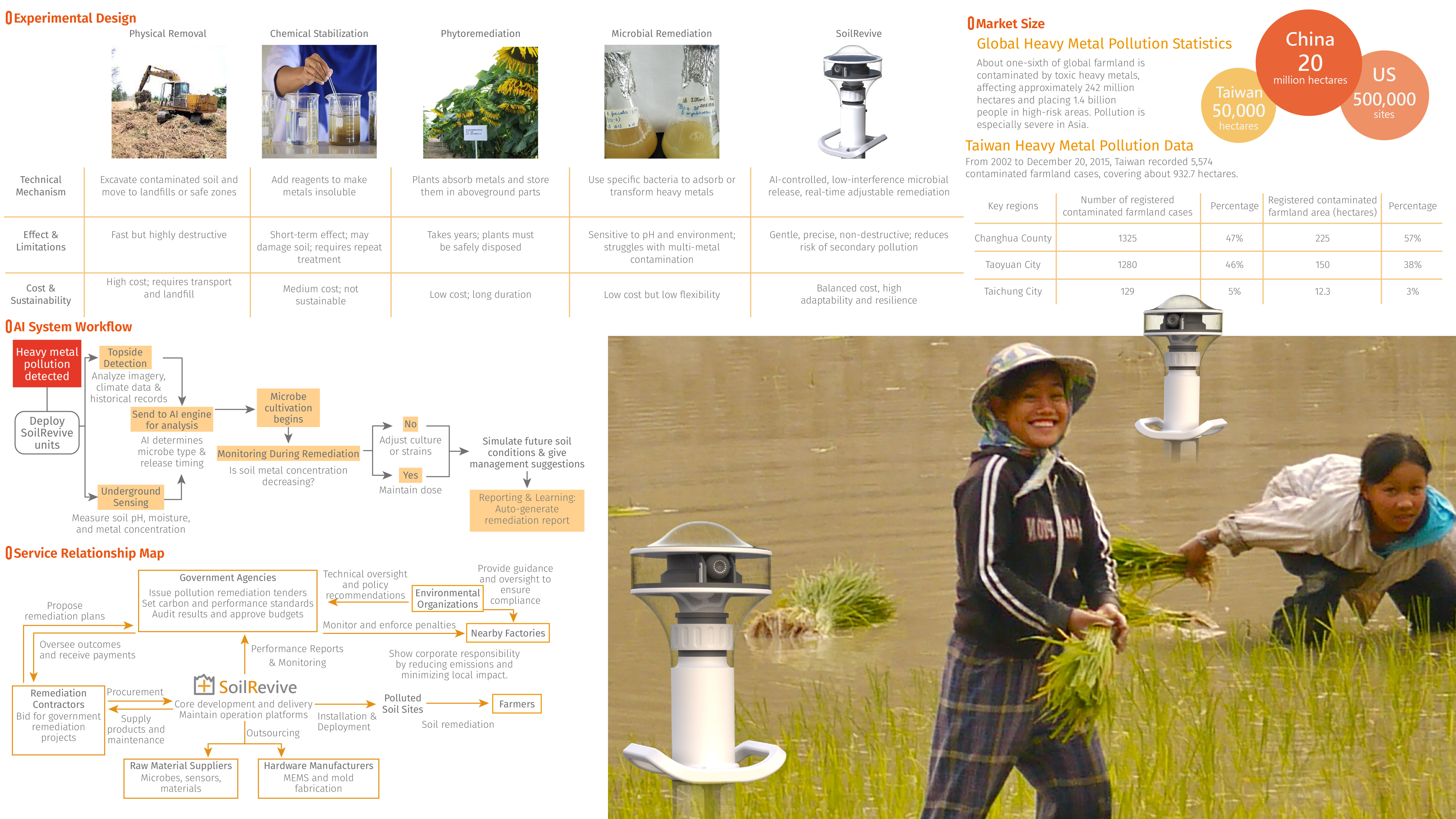
SoilRevive is an AI-driven microbial system for heavy metal soil cleanup. Inspired by Arabidopsis and mycorrhizal networks, it releases microbes to stabilize toxins and share data across units. AI adjusts timing based on real-time plant recovery.
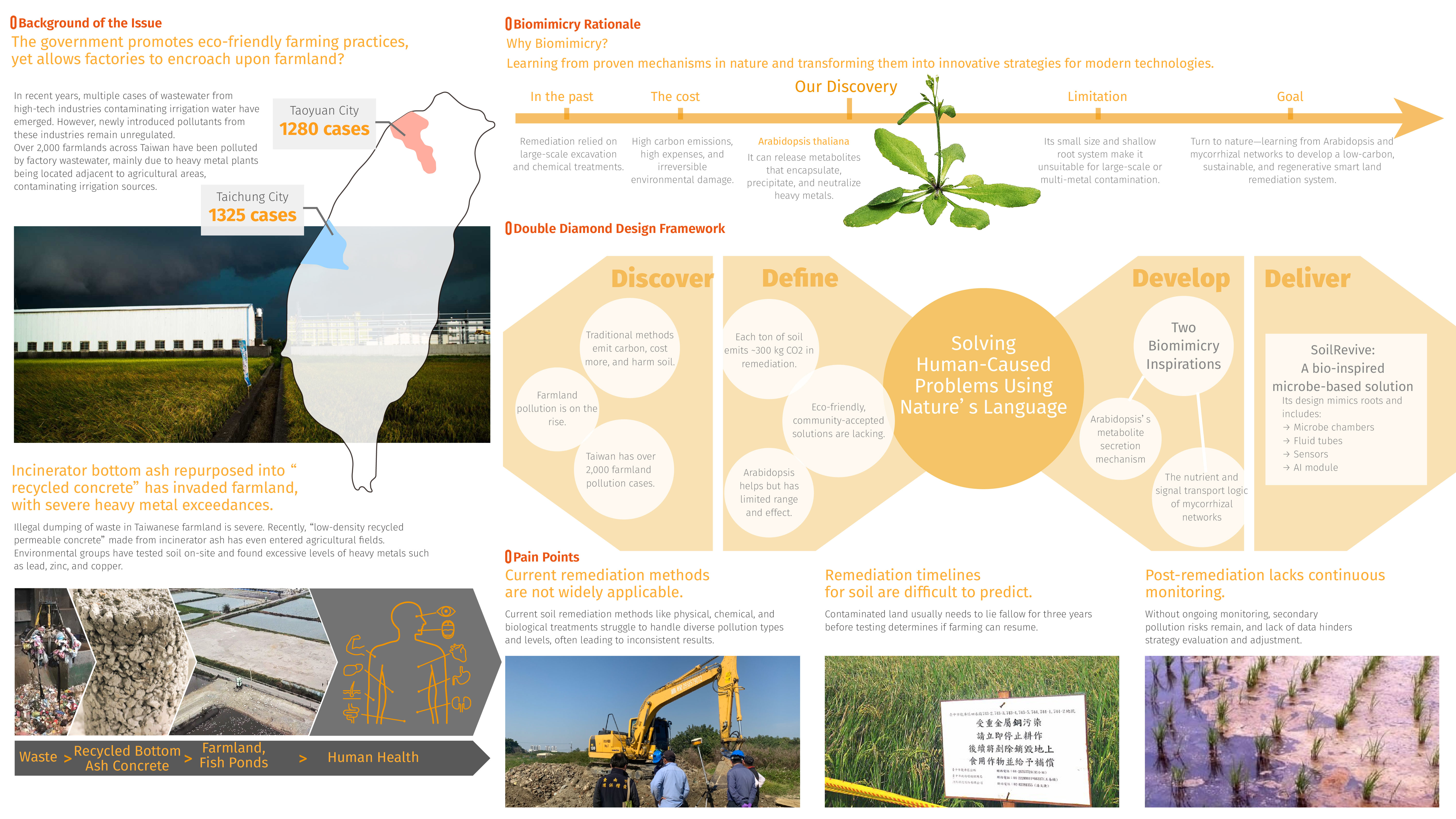
We are from Taoyuan, Taiwan, where the “cadmium rice incident” left a lasting impression on our childhood—a major case of heavy metal pollution. Even today, over 1,000 hectares of farmland remain contaminated, with excavation or abandonment still the only solutions. During a plant study, we discovered that Arabidopsis can release metabolites to precipitate heavy metals. This natural self-defense inspired us: Could we mimic this mechanism and create a long-term, low-carbon, localized solution?
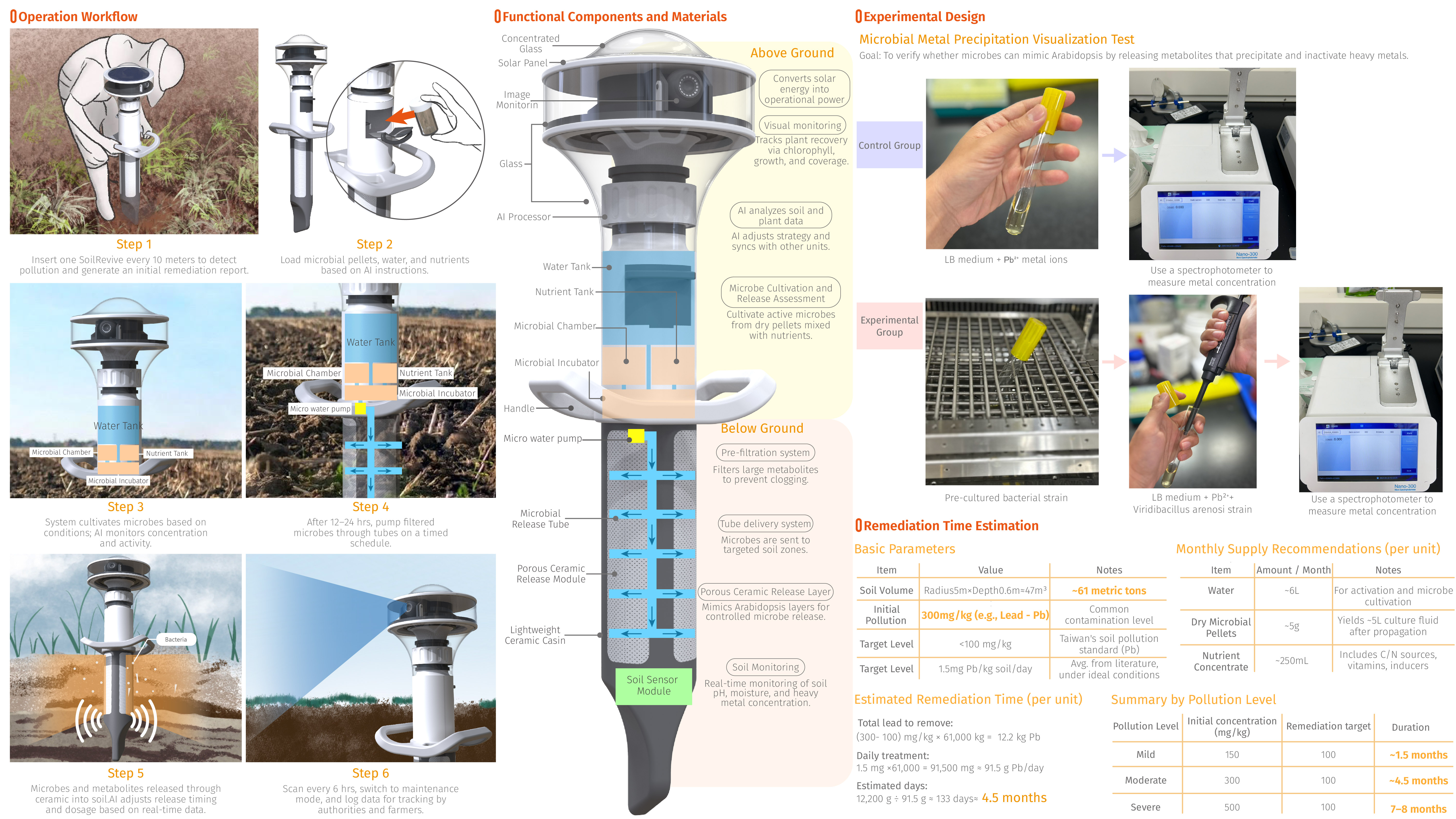
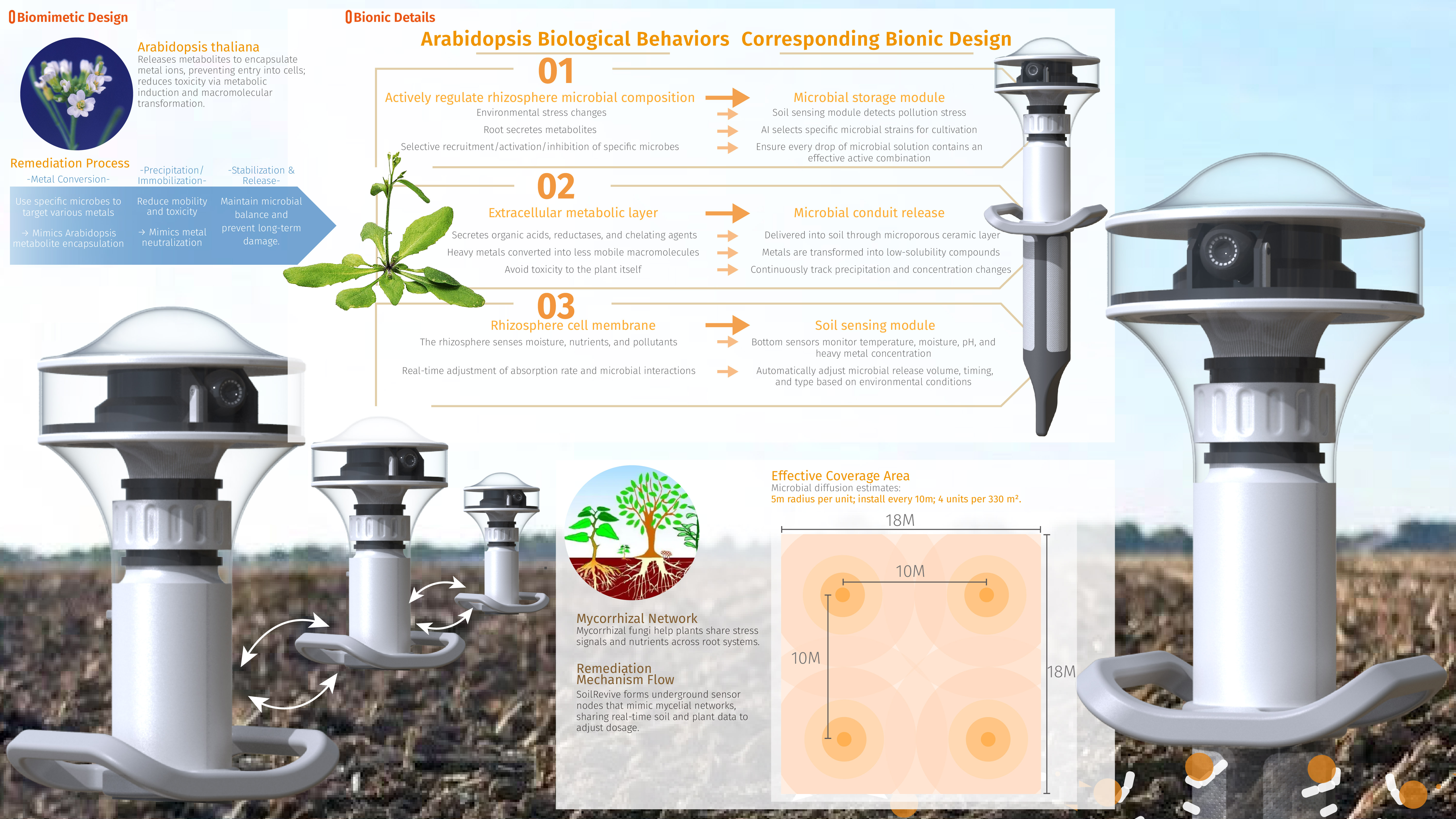
SoilRevive is a remediation system inserted into contaminated land. Inspired by plants’ natural mechanisms of “rhizosphere microbial selection” and “extracellular metabolite precipitation,” our system allows an artificial device to mimic self-regulating recovery processes: 1.Soil Sensing – The bottom of the device monitors temperature, moisture, and heavy metal concentration, and sends the data to an AI system for analysis. 2.Microbial Cultivation – Based on contamination levels, users add water, nutrients, and dry microbial agents through a top refill port, which are sent into the internal microbial growth chamber. 3.Biomimetic Release – After cultivation, microbes are delivered through microtubing and porous ceramic layers, simulating root secretions to adsorb and neutralize heavy metals. 4.Monitoring & Adjustment – The AI continuously evaluates remediation progress, adjusts microbial dosage and nutrient input, and generates a report upon completion.
1.We conducted field research on polluted farmlands in Taiwan to understand farmers’ needs and remediation challenges. 2.Inspired by Arabidopsis thaliana and mycorrhizal networks, we explored how plants secrete metabolites to immobilize heavy metals and coordinate with microbes. 3.Technical tests included: (1) Microbial precipitation using strains like Enterobacter cloacae to neutralize metals. (2) Testing dried microbial pellets for rehydration efficiency and shelf life. 4.We designed a modular device: • Above-ground: refill port, AI control unit, camera for monitoring. • Underground: sensors, microbial bioreactor, tubing, porous ceramic layer. 5.We optimized the system by: (1) Expanding bioreactor volume (2) Preventing clogs in microbe delivery (3) Adding carbon filters and membranes (4) Consulting experts (5) Planning field tests with AI feedback.
1.Biomimetic Mechanism: For the first time, we combine the principles of Arabidopsis thaliana and mycorrhizal networks as the core of a soil remediation system. 2.Non-destructive Remediation: Unlike traditional excavation, our method does not remove soil, alter the landscape, or cause secondary pollution. 3.AI-Controlled Microbial Strategy: Smart algorithms accurately adjust microbial strains and release timing based on soil data, improving remediation efficiency. 4.Modular Design: Microbes and nutrient formulas can be customized for different regions and pollution types, ensuring adaptability and scalability.
免责申明:本文中部分图文内容转载自jamesdysonaward,相关版权归原作者及出处所有。若涉及post plant侵权,请及时联系我们,我们将第一时间删除处理。