
 、
、
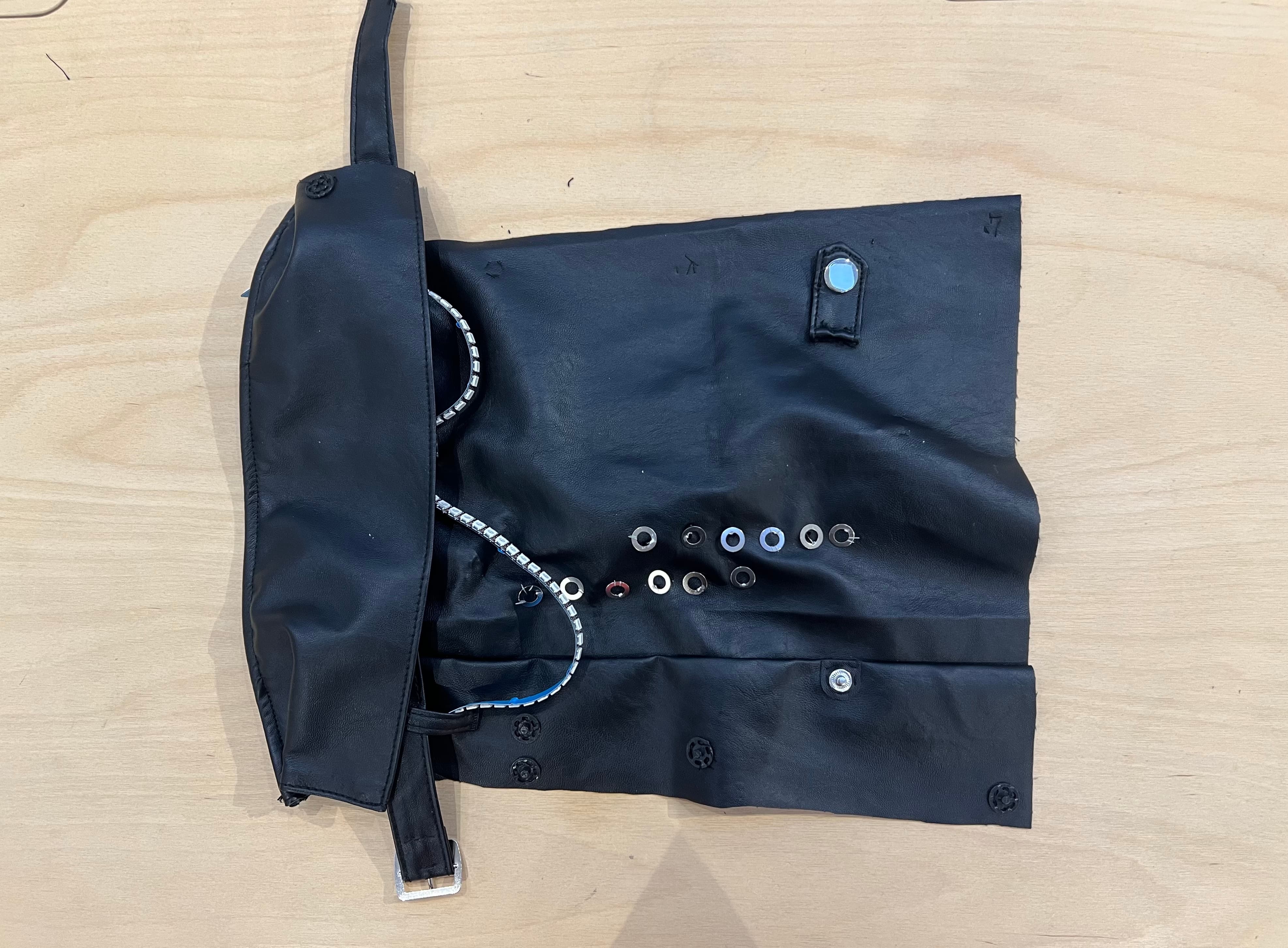
Armusic is a wearable music interface that enables people with hearing impairments to create a piano-bass-drum ensemble through intuitive arm movements and touch.By combining tactile and visual cues, it reimagines music as an inclusive, multisensory experience
Many people with hearing impairments can still sense rhythm and deeply enjoy music. Inspired by this, I created Armusic—a soft, wearable instrument that turns touch and motion into sound. It uses tactile feedback and visual cues to make music both felt and seen. The playing method is inspired by the Harpsichord, a historic keyboard with two manuals used for timbre and layered performance. With a simplified interface, Armusic aims to break down the barriers between body and sound, allowing anyone, regardless of hearing or training, to connect with music intuitively and equally.
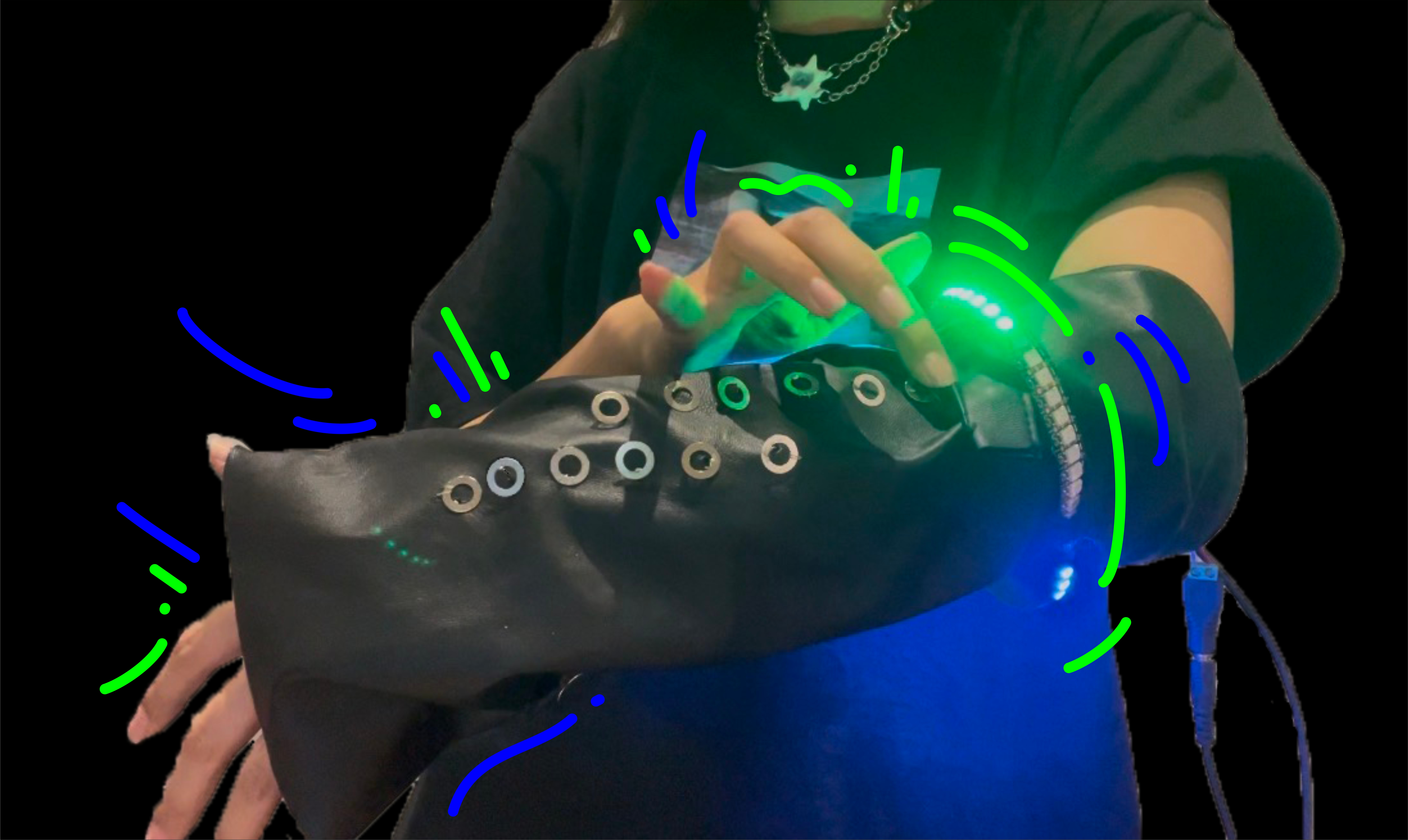
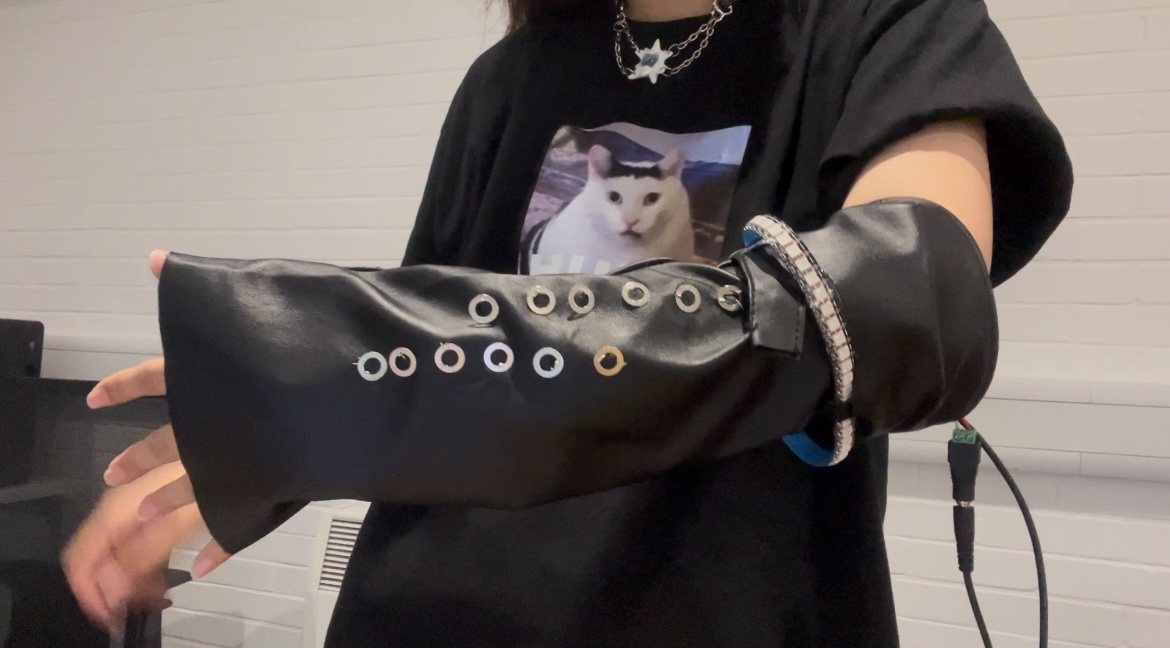
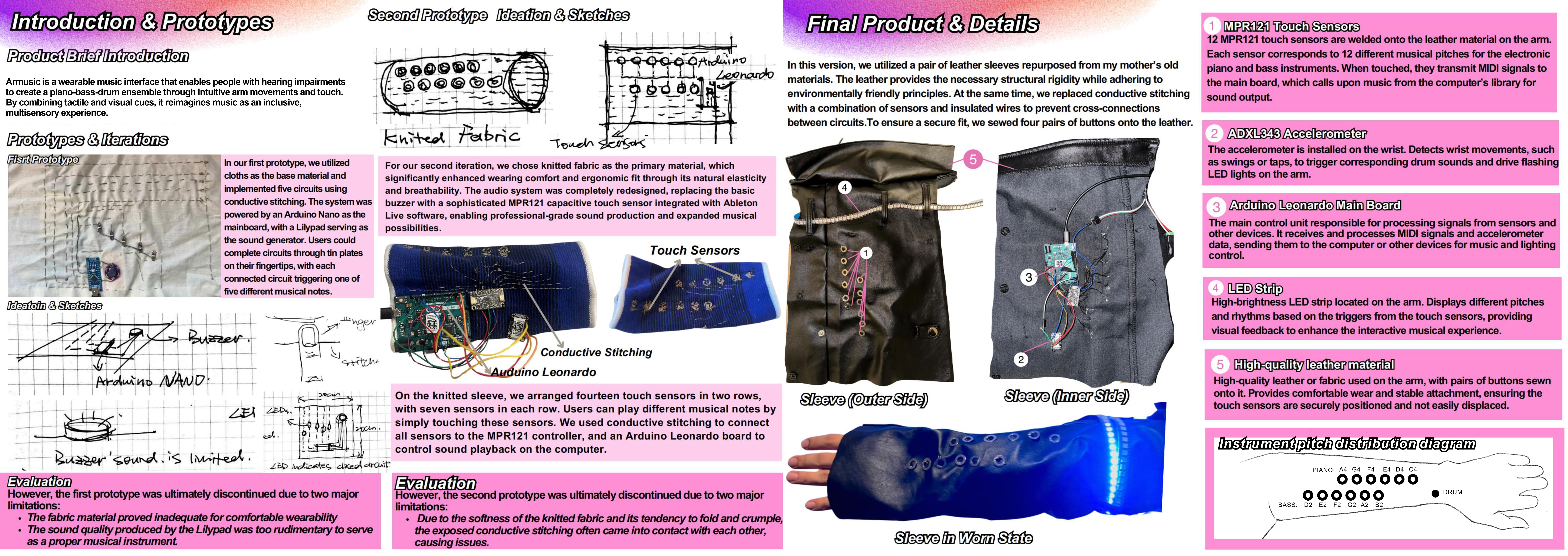
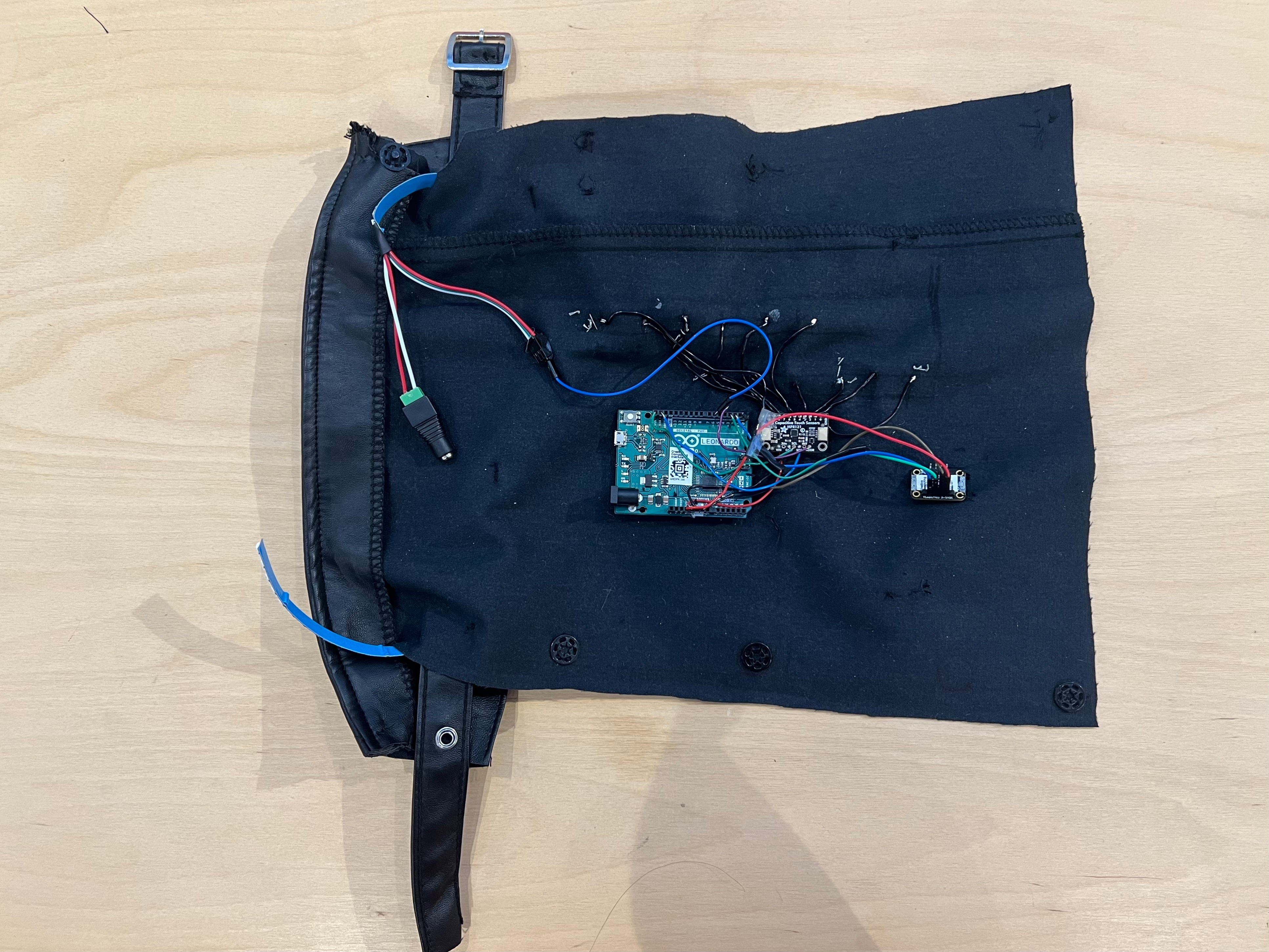
Armusic embeds 12 touch sensors and an accelerometer into a soft fabric sleeve. When users touch their forearm or move their arm, these gestures are captured and sent to a microcontroller (Arduino), which converts them into MIDI signals. These are then transmitted to music software like Ableton Live, triggering piano, bass, or drum sounds. Each instrument can be played at different pitches, simplifying performance while enabling rich harmonic expression. An LED strip wrapped around the arm offers real-time visual feedback in response to MIDI output. The LEDs change color by instrument—green for piano, blue for bass—and light up in varying amounts based on pitch: higher notes trigger more LEDs, lower notes fewer. This visual mapping helps users “see” the music they play, creating an intuitive connection between gesture, sound, and light—especially useful for those who cannot hear the audio directly.
The design evolved through hands-on prototyping, driven by a desire to make music accessible to people with hearing impairments. The first prototype used cotton fabric, conductive thread, a buzzer, and small LEDs to create a basic interactive circuit. It was low-cost, easy to assemble, and ideal for early experimentation—but limited in sound quality and expressiveness. The second version introduced knitted fabric for comfort and flexibility, integrating touch and motion sensors with a digital audio workstation (Ableton Live) to enable piano and bass sounds through arm gestures. However, the soft materials led to unintended triggers, as conductive threads occasionally made unintentional contact. The third prototype addressed these issues by switching to leather, offering greater stability and durability. Metal buttons were soldered to embedded wiring, with wires routed inside the material to ensure reliable signal transmission. Pleats and adjustable straps were added to improve ergonomic fit. To refine tone layout, I collaborated with music producers and adopted a harpsichord-inspired dual-manual logic. After repeated testing, I optimized the spacing and pitch mapping of each touch point to match the natural hand span—enhancing playability, comfort, and precision.
Unlike traditional instruments, Armusic doesn't just generate sound—it visualizes and physicalizes it. Through a unique combination of gesture-based control, color-coded lights, and tactile feedback, it creates a fully embodied music-making experience. This multisensory interaction makes music accessible not only to hearing-impaired users but also to beginners and non-musicians. Its soft, wearable design removes the stiffness and steep learning curve of classical instruments. With modular MIDI integration, Armusic can evolve into an open platform for education, therapy, and collaborative creativity.
In future iterations, Armusic will integrate vibration motors to enhance emotional expression through tactile rhythm, pitch, and timbre. The goal is to create a rich, high-resolution tactile language for music. It also aims to become an open-source platform. By offering APIs, MIDI integration, and visual configuration tools, even non-technical users can customize their instruments. This makes Armusic not just a product, but a toolkit—for inclusive music education, therapy, and creative exploration.
免责申明:本文中部分图文内容转载自jamesdysonaward,相关版权归原作者及出处所有。若涉及post plant侵权,请及时联系我们,我们将第一时间删除处理。