
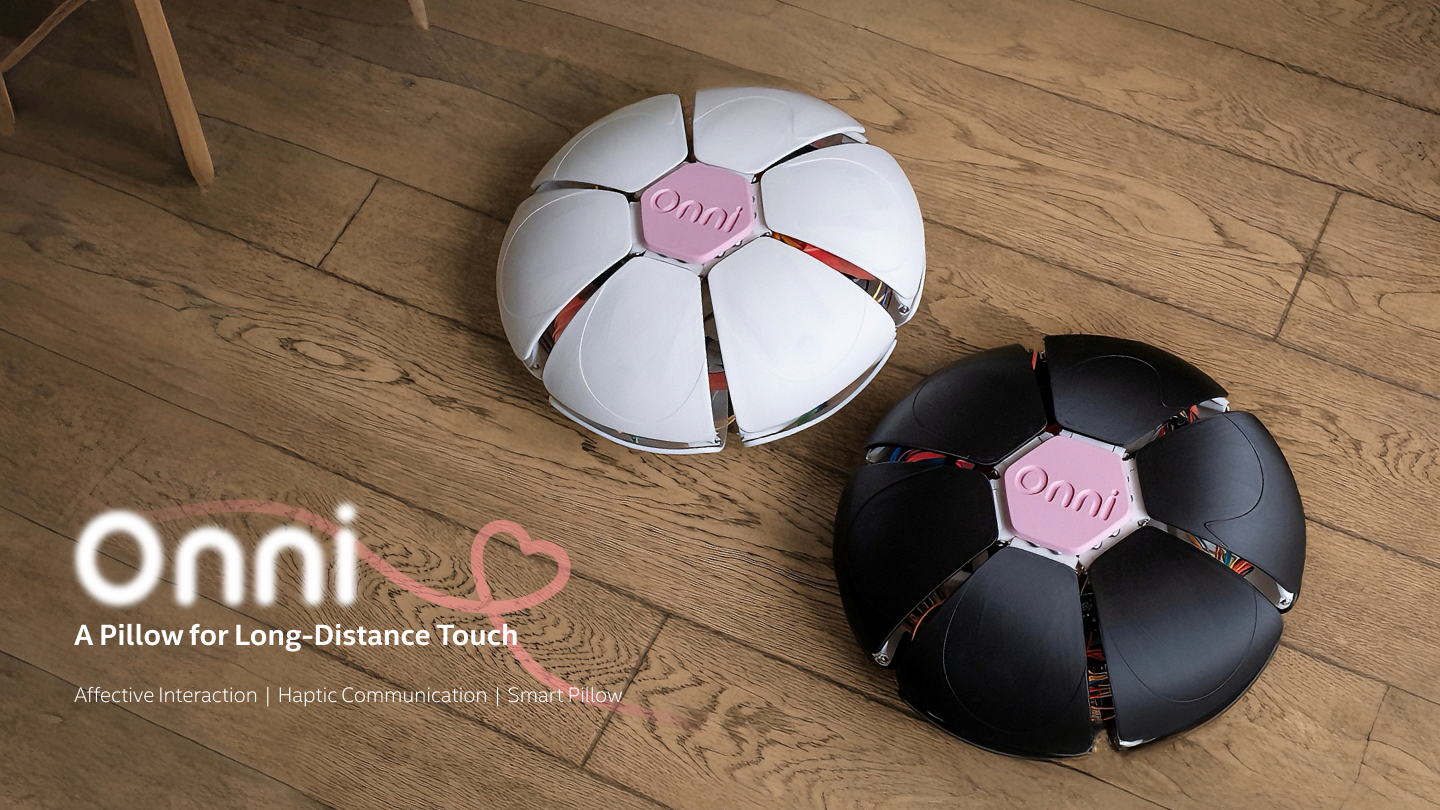
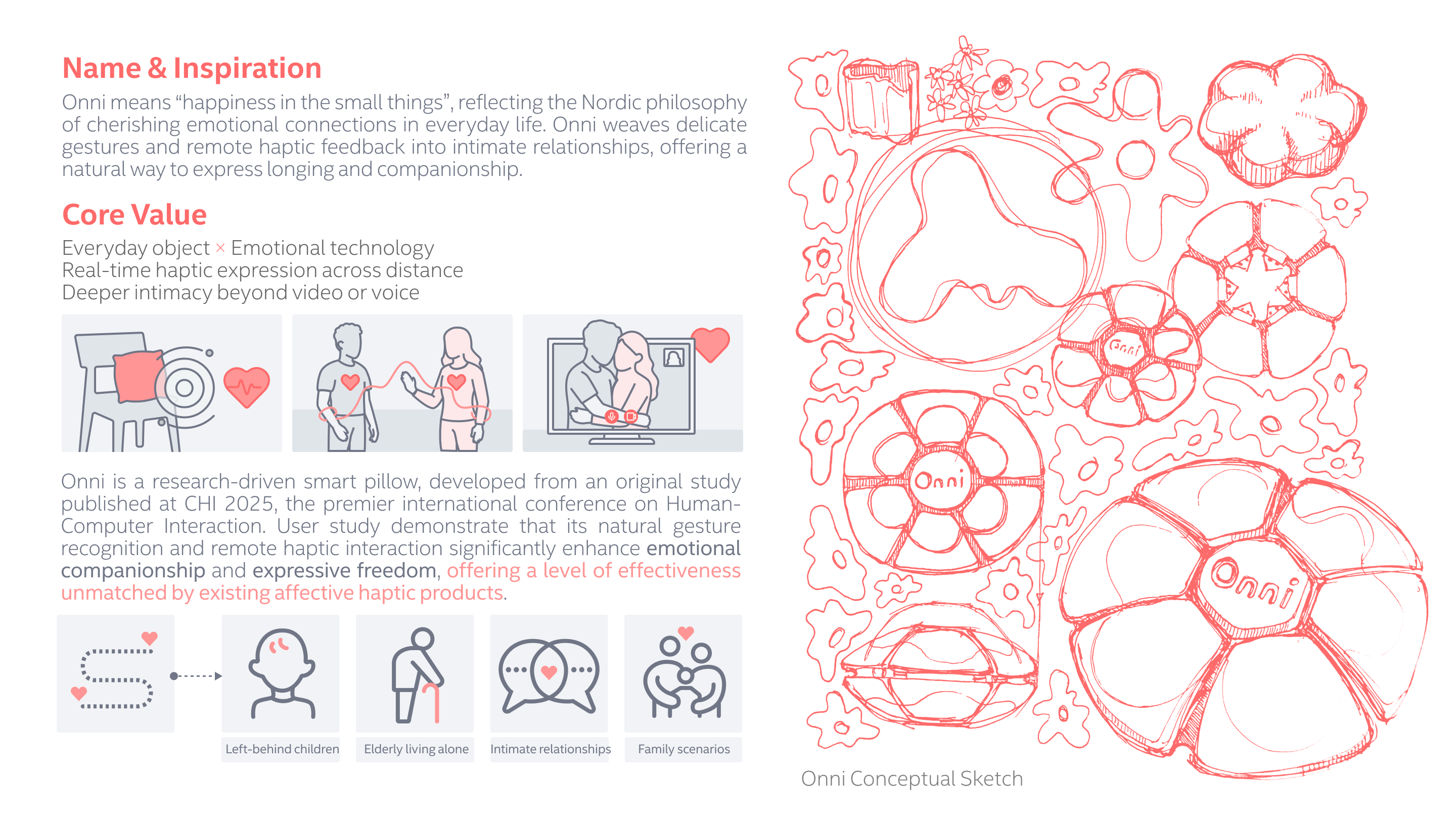
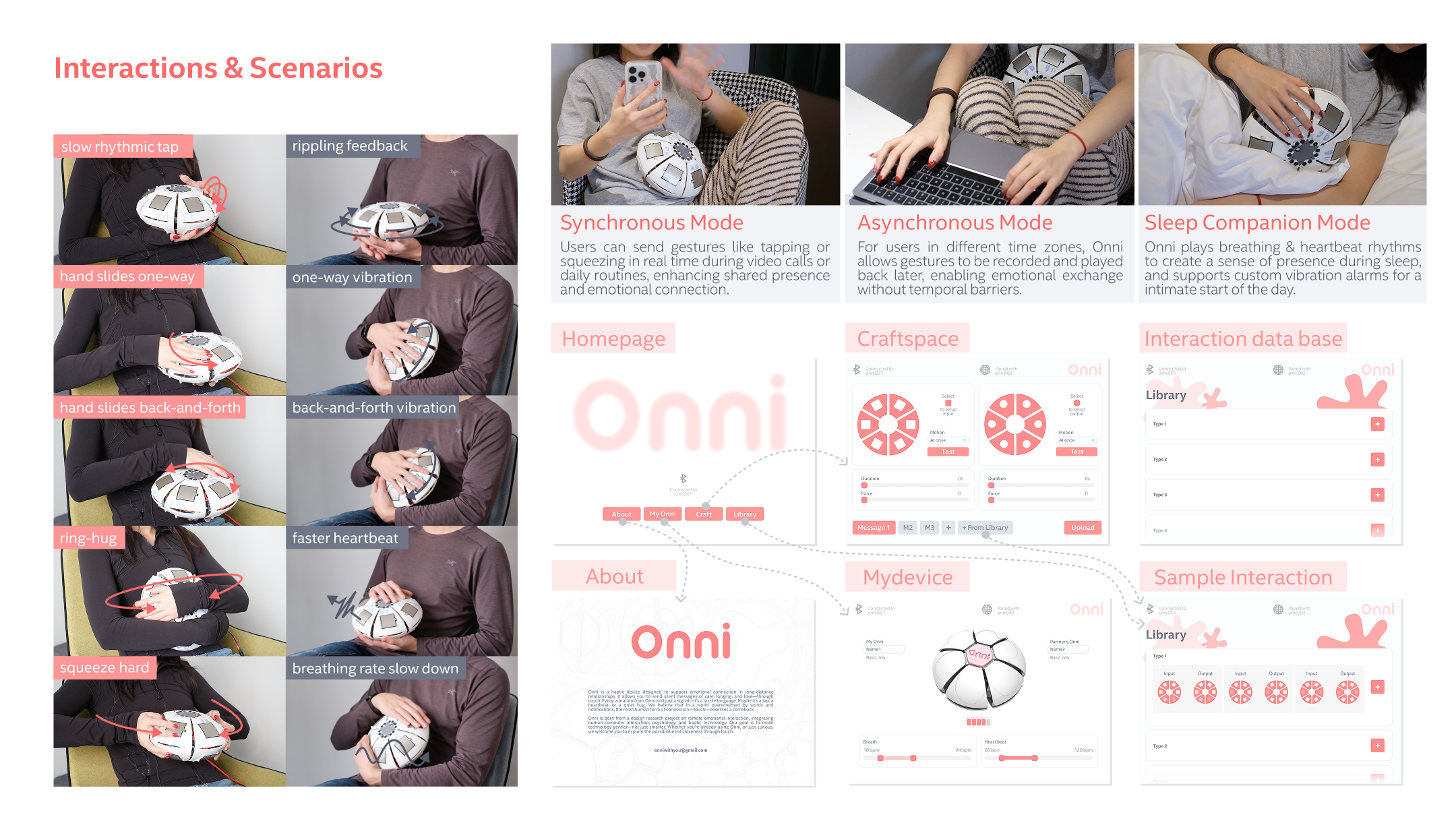
Onni is a haptic communication pillow designed to help long-distance couples stay emotionally connected. By combining breathing simulation, touch sensors, and vibration feedback, it enables users to send personalized tactile gestures across distance.
The idea for Onni came from my own experience of being in a long-distance relationship. After spending four years with my partner during undergrad, we had to live apart, first in different cities, then in different countries. Despite daily video calls, I missed the comfort of physical closeness, made me realize how little design attention had been given to remote touch and intimacy. I began exploring how tangible interaction and haptics could help convey presence and affection across distance. The concept of Onni emerged from both personal longing and a desire to create a novel interface that speaks through touch, not screens.
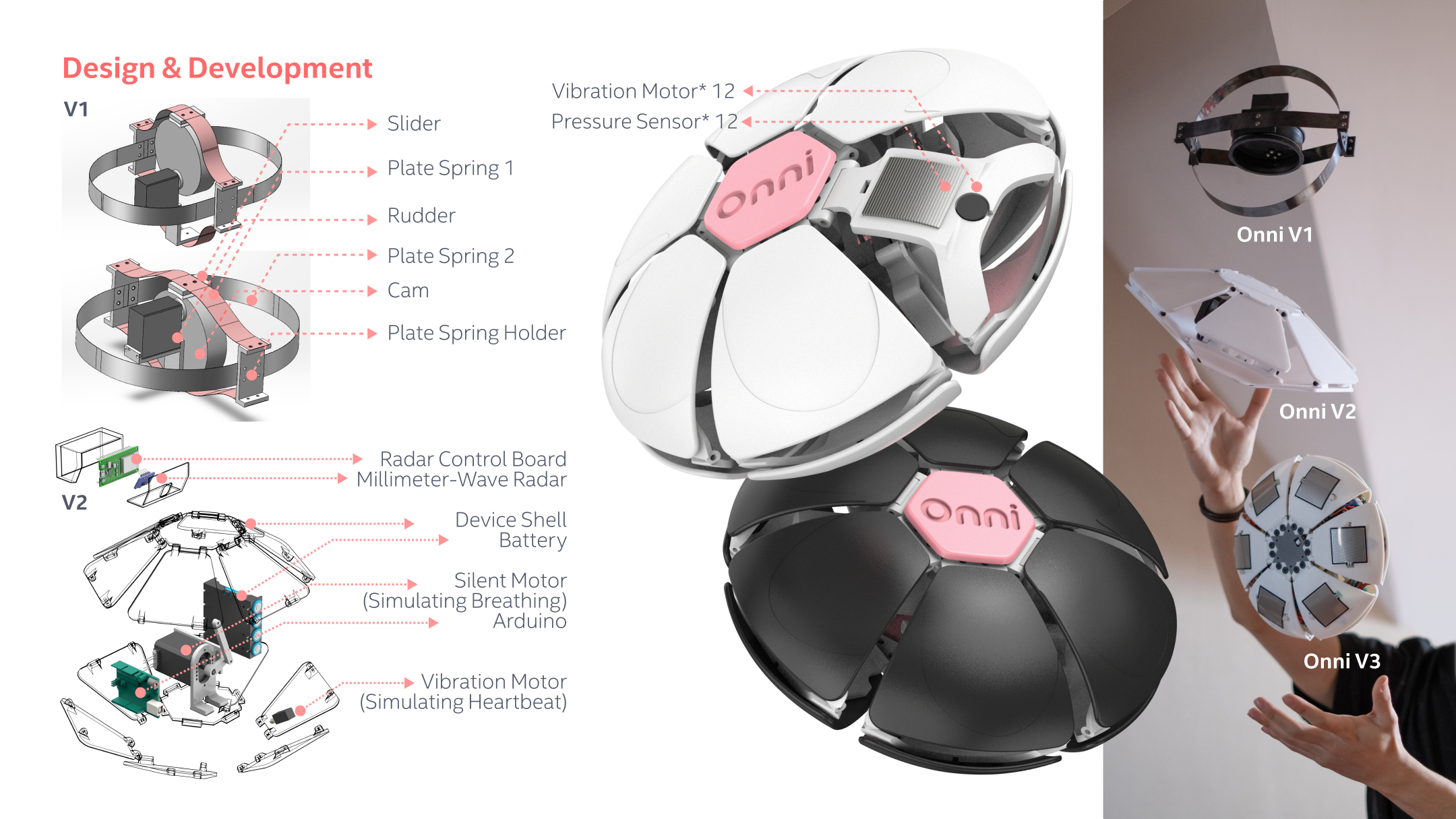
Onni is designed to simulate quiet breathing and heartbeat rhythms while allowing couples to send and receive gentle touch gestures. Instead of using noisy air pumps, we used a silent stepper motor to create a soft rising and falling motion, similar to someone breathing. To recognize touch gestures, the outer shell contains 12 pressure sensors hidden beneath its surface. When a user squeezes, holds, or taps different areas, the system detects the gesture. In response, 12 small vibration motors inside the pillow provide tactile feedback on the partner’s side. The device uses an Arduino board to control movement and sensing. It connects to Wi-Fi using an ESP32 chip, allowing two devices to communicate across distance. A simple web app lets users define their own "tactile language", for example, choosing what kind of vibration a long squeeze should trigger. This makes the experience more personal and expressive.
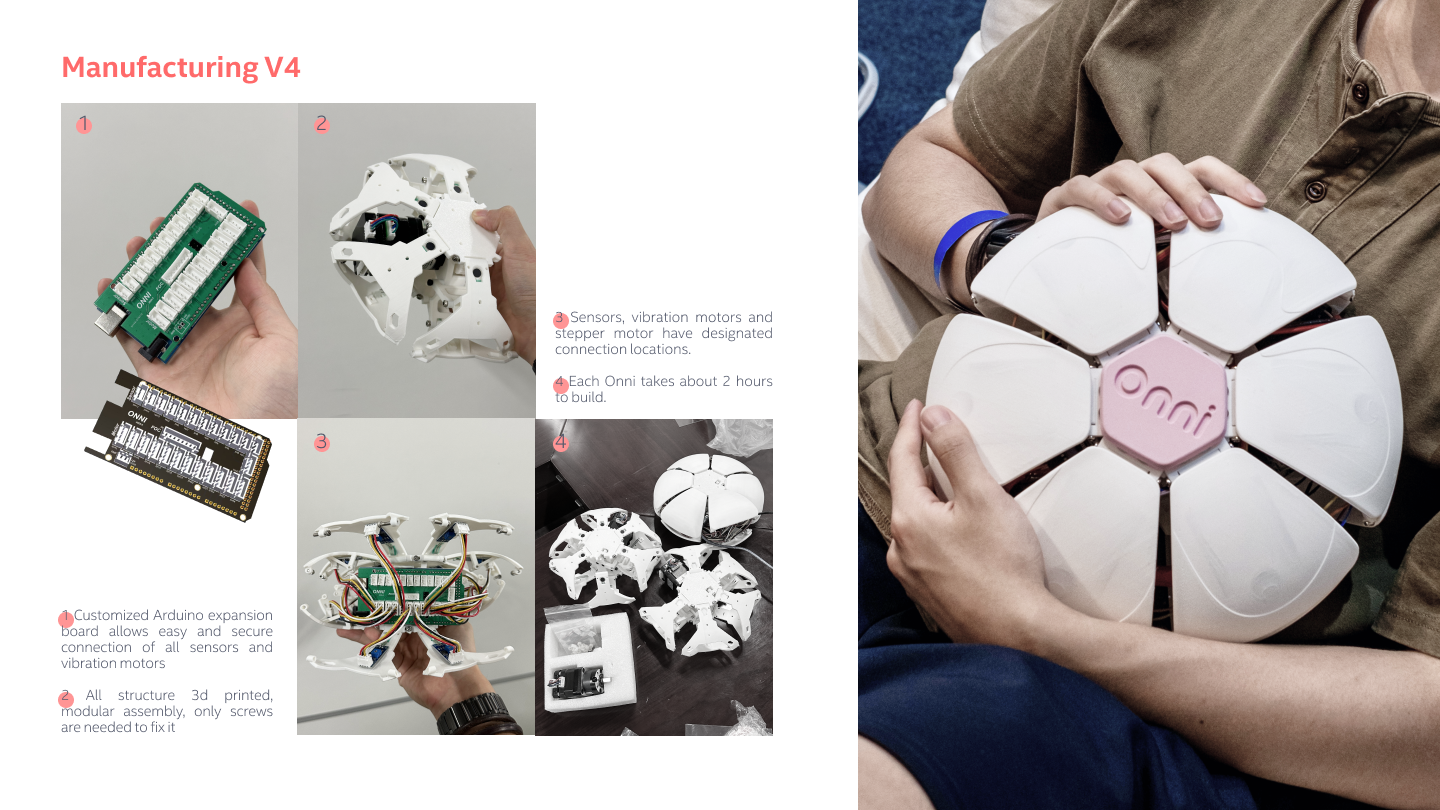
The initial prototype used a mechanical cam-and-spring system to simulate breathing, but the movement was rough and not emotionally satisfying. It was a novel structure, but too noisy and stiff. In the second version, we switched to a silent stepper motor, which produced smoother, slower movement. We also added a vibration motor to simulate a heartbeat. This version was embedded inside a plush shell to make it feel more comforting. However, it lacked interactivity and gesture recognition. Version 3 introduced a 12-point pressure sensor matrix and 12 corresponding vibration motors. This allowed users to send gestures which triggered specific vibration patterns. We began exploring what a “tactile vocabulary” could be, like how gestures might carry emotional meaning. However, wiring became complex and fragile, and the sensors were not big enough to trigger easily. Version 4 addressed these issues with a modular shell and soft silicone overlays on each sensor, which expanded the active surface area and made gestures easier to perform. To keep the wiring organized and mechanically stable, we designed a custom Arduino expansion board. A web app was also developed to allow users to customize gesture responses, giving couples the ability to create their own tactile language.
Onni focus on emotional expression through touch, not just data or notifications. While many existing “remote presence” designs rely on lights or sounds triggered by apps, Onni creates a quiet, tactile experience that feels more like being with someone than messaging them. Unlike most breath-simulating devices that use noisy air pumps, Onni uses a silent stepper motor to create natural, calming motion. It also supports personalized, gesture-based interaction. A key innovation is the ability for users to define their own tactile language via a web app—assigning emotional meaning to different gestures, such as a squeeze or a long press. Onni is not just a tool for signaling presence, it’s a soft, emotionally intelligent interface that reflects how people want to feel connected. It brings together physical comfort, custom interaction, and quiet intimacy, making it fundamentally different from conventional smart pillows or haptic gadgets.
免责申明:本文中部分图文内容转载自jamesdysonaward,相关版权归原作者及出处所有。若涉及post plant侵权,请及时联系我们,我们将第一时间删除处理。